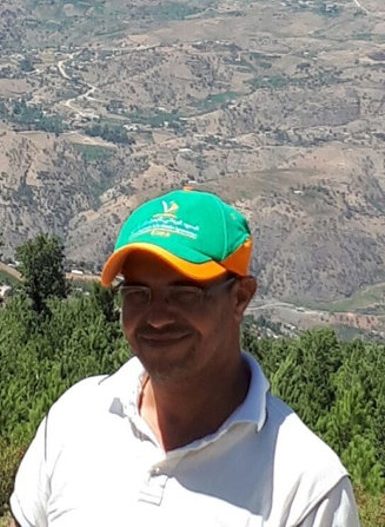
Dr. Rachid Bouharroud has led impactful integrated pest management (IPM) initiatives across Morocco and beyond, focusing on major crops including tomato, citrus, argan, cactus pear, and red fruits. As Head of the R&D Unit at INRA's Agadir Regional Center, his research centers on biopesticides from plant and bacterial sources, biological control, greenhouse climate management, and sustainable cultural practices that reduce pest pressure while safeguarding non-target organisms.
An active educator and advisor, Dr. Bouharroud has supervised over 100 graduate and undergraduate students from Morocco and international institutions, and regularly trains farmers in IPM methods. He also lectures part-time at IAV-Hassan II, teaching fruit and vegetable pest management courses.
Among his most impactful contributions is identifying cochineal-resistant cultivars of cactus pear, offering 100% effective, pesticide-free control for a previously devastating pest. This innovation has restored production and profitability for growers while eliminating environmental and human health risks. His eco-friendly IPM strategies for tomato and citrus have also delivered substantial economic and environmental benefits.
Dr. Bouharroud has authored over 100 peer-reviewed articles, six book chapters, and more than 140 conference papers. He has led six funded research projects and contributed to eight more as a team member.
Nominated by Dr. Stuart Alan Walters, Professor of Horticulture, Southern Illinois University – Carbondale.
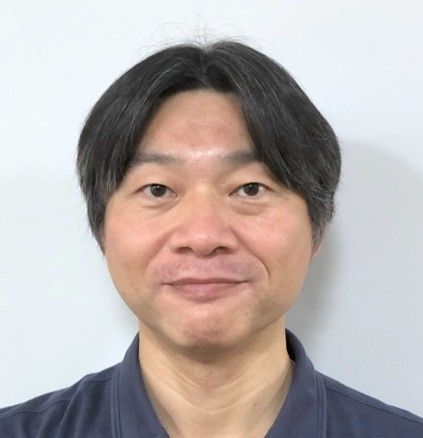
Dr. Youichi Kobori has made outstanding contributions to integrated pest management (IPM) through research, innovation, and on-the-ground implementation in Asia. With a career spanning over two decades, Dr. Kobori began his IPM work as a graduate student at Chiba University, where he researched diamondback moth mortality in relation to rainfall and examined insecticide side effects on beneficial parasitoids. His early work earned him Chiba University’s President Award.
As a postdoctoral researcher, he continued advancing ecotoxicological studies, developed patented technologies for rearing natural enemies, and authored a key review on the subject. Since joining JIRCAS in 2007, Dr. Kobori has led the development of regionally adapted IPM programs for citrus greening disease in Vietnam and sugarcane white leaf disease in Southeast Asia, using ecological modeling and practical field strategies.
Now a principal researcher and project leader for transboundary pest management, he oversees IPM research for major pests like fall armyworm and rice planthoppers in Thailand, Vietnam, and Cambodia. His work has directly benefited growers by improving plant health, supporting resilient production systems, and contributing to the stability of key agricultural markets such as sugarcane.
Nominated by Dr. Muhammad Haseeb, Center Director, Florida A&M University.

The National Insect Pest and Weed Biocontrol Program at Agriculture and Agri-Food Canada (AAFC), led by Dr. Tara Gariepy, is a nationally recognized team of 19 researchers and biologists driving Canada's long-standing leadership in biological control. For decades, the team has developed and implemented innovative, science-based strategies using beneficial insects to manage invasive pests and support sustainable agriculture. Their work has led to the safe release of over 75 biological control agents targeting 24 invasive species, significantly reducing reliance on chemical pesticides. Through strong collaborations with the Canadian Food Inspection Agency (CFIA), Centre for Agriculture and Bioscience International (CABI), and other partners, the team continues to advance integrated pest management (IPM) in response to global challenges such as climate change and biodiversity loss. Their commitment to research excellence, environmental stewardship, and international cooperation makes them a distinguished recipient of the International IPM Awards of Excellence.

The Tahoe Keys Property Owners Association (TKPOA) in South Lake Tahoe, California, was honored for its leadership in developing and implementing an innovative, integrated pest management program to combat aquatic invasive plants in the Tahoe Keys lagoons. Led by General Manager Hallie Kirkingburg and nominated by Dave Peterson, the team coordinated a groundbreaking three-year Control Methods Test (CMT) pilot project, engaging over 100 staff and 12 contractor teams. With support from public agencies, private stakeholders, and NGOs, the CMT tested a science-based, integrated approach—combining limited herbicide use, ultraviolet light, hand removal, and bottom barriers—to achieve a 75% reduction in invasive plant biovolume. This first-of-its-kind project in Lake Tahoe overcame historic regulatory barriers and set a precedent for collaborative, multi-agency action to protect water quality, native ecosystems, and recreational use. The TKPOA team’s sustained stakeholder engagement, rigorous monitoring, and transparent communication have laid the foundation for long-term aquatic plant management in the region.
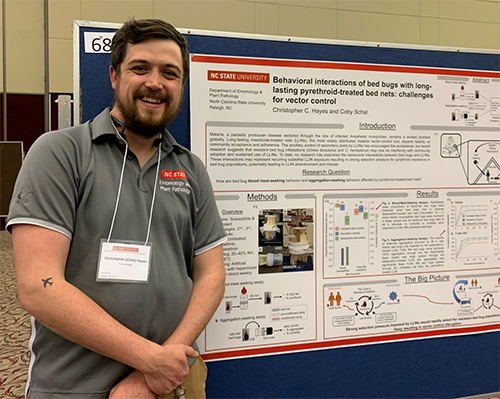
Dr. Christopher Hayes, nominated by Dr. Coby Schal of North Carolina State University (NCSU), is the recipient of the Award of Excellence for Doctoral Students. Chris earned his PhD from NCSU in 2024 and currently serves as an Extension Associate at the Structural Pest Management Training & Research Facility. Beginning his career as a pest management technician, Chris combined real-world experience with academic expertise in urban and public health entomology, including work at Duke University. His PhD research focused on how insecticide resistance in bed bugs may impact mosquito control efforts and global health interventions. Despite setbacks like the COVID-19 pandemic and unfunded grant attempts, Chris published significant research and contributed to HUD-funded studies targeting pest and allergen reduction in low-income housing. In addition to research, Chris plays a vital role in technician training, course development, and outreach, including leadership roles in BugFest and dozens of community education events. His work exemplifies dedication to integrated pest management, public health, and science communication.
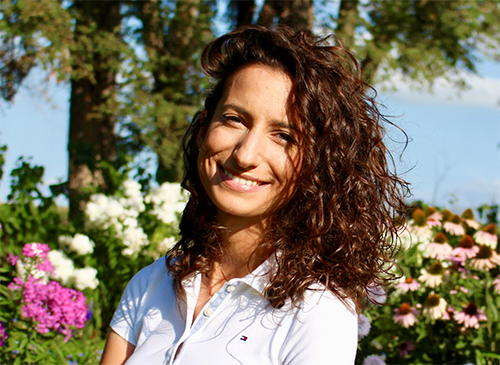
Andrea Rilakovic, nominated by Drs. John Ruberson and Julie A. Peterson of the University of Nebraska–Lincoln, is recognized with the Award of Recognition for her outstanding contributions to integrated pest management (IPM). Andrea received her PhD in 2024, building on years of research focused on insecticide application methods for managing western bean cutworm in corn. Her innovative work on chemigation integrates pest management, irrigation technology, and farmer engagement. Andrea secured a $300,000 USDA grant to support her interdisciplinary dissertation, demonstrating strong leadership and collaboration across departments and with agricultural stakeholders. In addition to her research, she has been active in Extension outreach and national scientific meetings, earning top honors in ESA competitions and serving in leadership roles.

Dr. Ulrich Kuhlmann is recognized with the prestigious Lifetime Achievement Award for his remarkable global leadership and enduring contributions to integrated pest management (IPM). Beginning his career at CABI’s Swiss Centre in 1989 after earning his degrees in arthropod classical biological control from the University of Kiel and completing a postdoc at the University of California, Berkeley, Dr. Kuhlmann has spent over 25 years advancing sustainable agricultural practices worldwide.
As Executive Director of Global Operations at CABI since 2016, Dr. Kuhlmann has led science-based programs across 10 international centers, including the transformative global initiative PlantwisePlus. This program supports millions of smallholder farmers in low- and lower-middle-income countries with the knowledge and tools to tackle plant health threats and reduce reliance on hazardous pesticides—directly addressing climate change, food security, and sustainability.
Dr. Kuhlmann is a visionary team builder and educator, instrumental in founding major international biosafety labs in China and Switzerland, and leading collaborative education initiatives like the ICM Master's program with the University of Neuchâtel. Through these efforts, he has trained hundreds of global agricultural professionals and forged lasting partnerships across continents.
His career reflects a tireless dedication to advancing IPM through innovation, capacity building, and cross-sector collaboration. Nominated by Dr. Marcos Alvarez of Agriculture and Agri-Food Canada, Dr. Kuhlmann’s leadership has left a lasting global legacy in sustainable pest management.

Dr. Peter Mason is honored with the Lifetime Achievement Award for his outstanding 40-year career in advancing classical biological control and integrated pest management (IPM) in Canada and beyond. As a senior scientist at Agriculture and Agri-Food Canada (AAFC), Dr. Mason played a foundational role in developing the National Biological Control Program, which established collaborative research with partners such as CABI to address invasive insect and weed threats using natural enemies.
Throughout his career, Dr. Mason led numerous high-impact projects targeting pests like bertha armyworm, Lygus bugs, cabbage seedpod weevil, diamondback moth, and leek moth across diverse cropping systems including canola, garlic, and strawberries. He championed a multidisciplinary and participatory approach, combining classical biological control agents with monitoring tools, biopesticides, and cultural practices to build practical, grower-friendly IPM systems.
His efforts significantly advanced the science and safety of biological control, improved rearing techniques, and trained a new generation of pest management professionals. Even in retirement, Dr. Mason continues to serve as an Honorary Research Associate, mentoring students and colleagues while shaping the future of sustainable pest management in Canada.
Dr. Mason’s enduring legacy is reflected in the ongoing work of over 18 AAFC researchers tackling invasive pests and weeds, and in his pivotal role in shaping regulatory standards for the safe use of biological control agents.