Daniel Frank, Virginia Tech, Department of Entomology, Blacksburg, VA
Recognizing the need to understand the drivers and barriers to IPM adoption among agricultural producers, a series of IPM-related questions was included in Virginia’s annual survey of private pesticide applicators beginning in 2022. These questions aimed to assess the extent to which agricultural producers were using IPM and its impact on their overall pesticide use. Additionally, the survey sought to identify factors that may inhibit IPM implementation and to pinpoint specific pests posing significant economic threats to crop production. The survey results showed a positive trend, with the majority of respondents reporting that they practice IPM and actively monitor for pests. However, despite these encouraging findings, no evidence suggested that IPM adoption had significantly reduced overall pesticide use. The identification of arthropod pests responsible for severe economic crop damage provides further insight into the challenges faced by Virginia’s agricultural producers and may help guide future research efforts toward developing more targeted and effective control strategies.
Md Panna Ali, Bangladesh Agricultural Research Council
Pesticides are commonly used in food crop production systems to control crop pests and diseases and ensure maximum high-market-value yield. However, the accumulation of these chemical inputs in crop fields increases risks to biodiversity and human health. In addition, people are increasingly seeking foods in which pesticide residues are low or absent and that have been produced in a sustainable fashion. For instance, chemical pesticides to control pests is the dominant paradigm in rice production. However, the use of natural enemies to suppress crop pests has the potential to reduce chemical pesticide inputs in rice production systems. Currently, predators and parasitoids often do not persist in rice production landscapes due to the absence of shelter or nutritional sources. In this study we altered the rice landscape through an eco-engineering technique that aimed to increase natural biocontrol agents for crop protection. In this system, planting nectar-rich flowering plants on rice bunds provided food and shelter to enhance biocontrol agent activity and reduce pest numbers, while maintaining grain yield. The abundance of predators and parasitoids and parasitism rates increased significantly in the eco-engineering plots compared to the insecticide-treated and control plots. Moreover, a significantly lower number of principal insect pests and damage symptoms were found in treatments where flowering plants were grown on bunds than in plots where such plants were not grown. This study indicates that manipulating habitat for natural enemies in rice landscapes enhances pest suppression and maintains equal yields while reducing the need for insecticide use in crop fields.
Md Mostafizur Rahman Shah, Bangladesh Wheat and Maize Research Institute
Maize is an important cereal crop in Bangladesh due to its high demand in the feed industry, for human consumption, and in starch production. One of the major challenges to maize production is the infestation of insect pests. Recent invasion of the devastating and highly polyphagous Fall Armyworm (FAW), Spodoptera frugiperda further confronts the maize production in Bangladesh. An agro-ecological approach to combat the FAW was investigated in the last two successive seasons of 2020-21 and 2021-22, at three locations in the first year and two in the second year, namely Dinajpur, Rajshahi, and Gazipur in Bangladesh. Investigations were carried out using cowpea as an intercrop with different spacing. Monitoring through using pheromone traps showed that FAW population pressure increases from February, peaks in March and decreases gradually from April. Foliage damage was significantly higher in the monoculture maize field than in the intercropped field. Cob damage did not vary among the mono- and intercropped maize fields but varied significantly among the locations. Yield-contributing characters also varied significantly. A significantly higher yield was obtained from 60cm spacing than 90cm and higher economic return was attained from intercropped approaches. When compared, a higher number of predator and pollinator insects were observed in the intercropped field than the monocropped maize field. Therefore, our findings demonstrated that agro-ecological interventions, such as intercropping with cowpea, not only successfully reduced the number of FAW to tolerable levels but also created favorable environmental conditions for beneficial insects, and ultimately increased the net-income of small farmers in Bangladesh.
Myleen Corpuz myleen.r.corpuz@isu@edu.ph, Isabela State University-Cagayan Valley Cacao Development Center, San Fabian, Echague, Isabela PHILIPPINES
Many pests, like cocoa mosquitos, infest cocoa, resulting in low yields in cacao-producing nations like the Philippines. In Isabela Province, Philippines, synthetic pesticides are recommended to combat insect pests, as well as a combination of synthetic pesticides and cultural practices for diseases and weeds. Farmers in Isabela Province, on the other hand, do not want to follow these guidelines because pesticides are expensive, and producer prices are low. There is also concern that widespread usage of synthetic pesticides may harm both human health and the environment. With the goal of increasing cacao yields through environmentally friendly pest control practices, an integrated pest management (IPM) package based on biological control for insect pests and cultural practices for disease and weed management was evaluated in farmers’ fields with their active participation. The IPM package increased yields significantly and was proven to be more profitable than farmers’ current approaches.
Kenneth Wise klw24@cornell.edu, Cornell University
Dung beetles play a crucial role in pasture ecosystems by recycling manure, enhancing soil health, and competing with horn and face flies for resources. During the 2024 growing season, we surveyed 19 cattle farms across New York State to assess dung beetle diversity and abundance. Eight of the farms used feed-through insecticides for horn and face fly control, while the remaining farms did not.
On each farm, we collected 20 manure samples biweekly from May 1 to September 30, for a total of 3,800 samples. These samples were processed using modified Berlese funnels to extract beetles. We captured over 10,000 Scarabaeidae beetles, identifying 15 species within the Aphidiini tribe and four species from the Onthophagini tribe. Additionally, approximately 10,000 Hydrophilidae beetles were collected.
We are currently analyzing the data statistically, and the results will be presented in a poster session. The findings are expected to shed light on how feed-through insecticides influence dung beetle populations and their ecological functions on New York State cattle farms.
Kenneth Wise klw24@cornell.edu, Cornell University
In spring, adult seed corn maggot (Delia platura) flies lay eggs in fields planted with corn and soybeans. Fields at higher risk include those with cover crops and manure applications, which are prevalent in New York State. Seed corn maggots are attracted to these fields and lay eggs in the soil. After eggs hatch, maggots locate germinating seeds, burrowing into them and consuming the interior tissue. This feeding behavior can significantly reduce plant populations in fields with elevated organic matter.
Neonicotinoid seed treatments have historically been used to protect crops; however, these compounds are now recognized for their adverse effects on pollinators and their potential to contaminate surface and groundwater. From 2022 to 2024, we conducted 10–16 trials annually across multiple state locations to evaluate alternative seed treatments. These included diamide, spinosad, neonicotinoid, fungicide, and untreated seeds. Laboratory bioassays and field trials demonstrated that diamide is an effective alternative to neonicotinoids, while spinosad also shows some promise. Field infestation rates were generally low, indicating that severe seed corn maggot damage may be uncommon.
Cezarina Kora cezarina.kora@AGR.GC.CA, Agriculture and Agri-Food Canada, Pest Management Centre, Ottawa, Ontario, Canada
Hops are grown commercially on 140 ha in the Canadian provinces of Ontario and Quebec. Spider mites (Tetranychidae) are serious pests of hops, lowering harvest quality of cones through feeding damage. Naturally occurring predatory mites may control spider mites, but the species occurring in Canadian hopyards are not well-known. Leaf (basal and 2m height) and cone samples were collected on 3 dates in 2022 and 2023 from 20 locations in 9 hopyards in Ontario and Quebec and mites were recovered for identification. There were 97% and 94% Tetranychus urticae (two-spotted spider mite) in 2022 and 2023, respectively. Tetranychus schoenei was the only other spider mite species recovered. Nine species of predatory mites (Phytoseiidae) were found over both years, of which Neoseiulus fallacis, Galendromus occidentalis, and Amblyseius andersoni accounted for about 96% of the total each year. Spider mite populations started on basal leaves in June, moving to 2m high leaves in July and August. There were 10-fold fewer spider mites on cones than leaves in August, and a higher predatory to spider mite ratio on cones than leaves. Hopyard interior sampling locations had more spider mites early in the season, but edge and interior locations had equal numbers later, as immigrating spider mites moved into hopyards. Predatory mite distributions followed spider mite distributions, and there were significant correlations between population numbers by August in 2023. Our results inform development of biocontrol strategies to achieve integrated management of spider mites in hops through augmentative releases of commercially available predators or by conserving naturally occurring communities.
Cezarina Kora cezarina.kora@AGR.GC.CA, Agriculture and Agri-Food Canada, Pest Management Centre, Ottawa, Ontario, Canada
Crop production in Canada is greatly affected by herbicide-resistant weeds. Herbicide resistance is estimated to cost Canadian farmers in some provinces between $43 and $343 Million annually due to increased use of herbicides and decreased crop yield and quality from weed competition. Traditional dose-response methods using weed seeds planted and grown in a greenhouse to confirm resistance to specific herbicides in suspected weeds can take 6-12 months and results can only be considered for decision making purposes in the following season. Recently developed genetic tests use leaf tissues from suspected weed samples collected in fields and involve DNA extraction and analyses to determine the presence of mutations conferring resistance in the plant. This molecular approach renders resistance testing much cheaper and faster, hence more accessible to farmers. Test results can be communicated back to farmers within 1-2 weeks of sampling, allowing efficient, in-season decision-making and adjustments to weed management programs. Since 2015, multi-partner projects featuring collaborative networks of federal, provincial, and private researchers continue contributing to a growing list of quick genetic test protocols for many concerning weed species. There are currently at least 94 developed and validated tests made available to regional service labs offering testing to farmers for 30 weed species covering 5 herbicide resistance groups. Thousands of genetic tests have been conducted commercially across many Canadian provinces. These services support information-based weed management decisions at field level through enabling farmers to detect issues early and make timely choices based on the presence of resistant weeds in their crops.
Cezarina Kora cezarina.kora@AGR.GC.CA, Agriculture and Agri-Food Canada, Pest Management Centre, Ottawa, Ontario, Canada
Cabbage maggot remains an important pest for brassica vegetable crops. With the phase-out of chlorpyrifos products in Canada since January 2024, there is an increasing need for alternative solutions to manage this pest in both root and leafy brassica vegetables. Previous research showed that insect netting can be effective to manage cabbage maggot. On-farm demonstration projects were established to achieve knowledge transfer and show growers the benefits and economics of adopting the insect netting technology commercially. Wondermesh insect netting of 0.8 mm mesh size was deployed over transplanted cabbage, rutabaga, and turnip crops using the mechanical HIWER rollers and reels system. The netting was secured with sandbags and metal rods. Demonstration trials confirmed that netting cover offers a viable alternative option for cabbage maggot control and showed growers how to efficiently deploy netting with a mechanized system. Adoption of netting reduced by 75-100% the need for insecticide sprays against all Brassica pests while maintaining yields comparable to control plots subjected to standard pesticide spray regimes. A partial cost-benefit analysis over a 15-year period estimates that using netting with the HIWER system increases operation cost of crop protection by $20,000. However, given the environmental benefits, cooperative equipment sharing and subsidy programs are expected to promote a more widespread uptake of this technology. Adoption of this alternative practice as part of an integrated management system could significantly reduce or completely eliminate the need for treatments with conventional insecticides, addressing concerns about pesticide resistance and chemical load in the environment.
Cezarina Kora cezarina.kora@AGR.GC.CA, Agriculture and Agri-Food Canada, Pest Management Centre, Ottawa, Ontario, Canada
National in scope and in operation since 2003, the Pesticide Risk Reduction Program of Agriculture and Agrifood Canada’s Pest Management Centre is mandated to reduce the risks associated with the use of pesticides in agricultural crop production. The Program achieves this goal by improving grower access to alternative pest management solutions, including decision support tools, biocontrol products, beneficial practices and integrated management systems to address priority pest issues. Since inception, the program has supported over 230 research, development, and technology transfer projects leading to new pest management solutions to benefit the agriculture sector and the environment. The Program has published 36 crop profiles and facilitated registration of 29 new biopesticide products as key IPM and resistance management tools. The results coming out of the Program activities are widely disseminated, and new technologies are promoted through a variety of communication channels and media promoting grower awareness and uptake. The Pesticide Risk Reduction Program works closely with the Minor Use Pesticides Program, also under the Pest Management Centre, to help Canadian growers achieve sustainable pest management goals. The Minor Use Program supports registration of chemical pest control options for minor crops, such as horticulture and specialty crops. It achieves this mission through conducting field efficacy and residue trials to generate data necessary to fulfill regulatory requirements for registration of new pesticide uses for these crops. There are about 40 science professionals and technicians working to deliver both Pesticide Risk Reduction and Minor Use Pesticides Programs located at 12 federal research centers across Canada.
Cezarina Kora cezarina.kora@AGR.GC.CA, Agriculture and Agri-Food Canada, Pest Management Centre, Ottawa, Ontario, Canada
Biological control agents (BCA), including beneficial parasitoid and predatory organisms, provide natural pest control to protect crops and the environment by reducing, or eliminating the need for chemical pesticides. Using live organisms to manage insects and weeds has been explored since the early 1880s. Agriculture and Agri-Food Canada (AAFC) scientists have established significant expertise discovering, developing and validating biocontrol solutions leading to the introduction of many BCAs to protect crops and natural ecosystems in Canada. Biocontrol agents can come from multiple taxa and include beneficial insects, mites, nematodes and fungi. Biocontrol agents are targeted against invasive species which invade new areas without encountering natural enemies from their place of origin. Invasive species can significantly affect ecosystem health through displacement of native species, thus disrupting biodiversity. Canada has an extensive track record in the biocontrol of introduced pests through releases of >200 BCAs against 92 invasive species since 1950. As part of the National Biocontrol Program for Invasive Arthropods and Plants, AAFC scientists aim to identify, develop and release biocontrol agents which are host specific and can be safely released to attack only the intended target pest. Major successes include establishing effective management systems for invasive plants such as leafy spurge, houndstongue, diffuse knapweed, purple loosestrife, and dalmatian toadflax, and invasive insect pests, such as wheat midge, lily leaf beetle, cereal leaf beetle, leek moth.
Sandipa Gautam sangautam@ucanr.edu, University of California Agriculture and Natural Resources
Citrus mealybug (Planococcus citri) is a polyphagous pest that affects citrus and various other plants. Mealybugs are small, soft bodied, oval-shaped insects covered in a white, waxy powder and are often found in clusters. They cause damage by sucking plant sap, causing yellowing of leaves and fruits and indirect damage by depositing honeydew that results in sooty mold growth. Although present in citrus systems in California, mealybugs were kept in check by natural enemies and did not require targeted management until 2020. In recent years, mealybugs have become an increasingly challenging problem. Field trials identified several pesticides registered for citrus in California are toxic to citrus mealybug and can be used for near-term management. However, toxicity of insecticides on mealybug predators/parasitoids is an important factor to consider in integrated pest management (IPM) strategies. We conducted laboratory bioassays to evaluate acute toxicity of five pesticides: abamectin, acetamipirid, azadirachtin, afidopyropen, and spirotetramat. Two life stages of a mealybug predator, larvae and adults of mealybug destroyer (Cryptolaemus montrouzieri) and adult stage of a mealybug parasitoid, Anagyrus vladimiri, were tested. Fully opened leaves were dipped in pesticide solutions, air dried, and natural enemies were released. Mortality was assessed at timed intervals, 2, 4, 8, 12, 24, and 48 hours after exposure to treated leaves. Results are discussed in the context of IPM of citrus mealybug. Research was supported by the Citrus Research Board.
Carrie Jensen carriejensen@unr.edu, University of Nevada Reno Extension
Water scarcity and decreased water quality are problems for urban areas in the state of Nevada, USA, where most of the population lives in closed watersheds. Water quality studies found detectable levels of pesticide residues in waterways located in urban sites in Nevada (Thodal et al., 2009; Huntington et al., 2020). These pesticides included herbicides frequently used for nonagricultural purposes in urban areas. As Nevada’s urban populations have increased (U.S. Census Bureau, 2020) and climate-change related droughts are of greater concern (Elgeberi et al., 2022), the need for education regarding landscape water conservation and watershed protection is growing. In 2022, we partnered with the local nonprofit One Truckee River to develop a hands-on training called Nevadascapes, which helps homeowners conserve landscape water and reduce irrigation runoff, keeping pesticides and other pollutants out of local waterways. Classes focus on landscape and irrigation system design and plant selection, including native and pollinator-supporting plants. As of October 2024, 122 community members have attended these classes, which sell out quickly each time we offer the program. Attendees complete a pre-and post-training survey to assess their knowledge of key principles before and after the training. These surveys reported an average increase in knowledge of 57.4%, with 97.3% of participants intending to use at least one recommended practice. Our strategy for increasing statewide access to Nevadascapes is to create an online, on-demand program that provides basic watershed protection information, with at-home exercises participants can use to strengthen their skills.
Hannah Eason hwooten@ufl.edu, UF/IFAS Extension, Orange County, Orlando, Florida, USA
Florida’s environmental horticulture industry exceeds $10 billion in annual value, employing more than 100,000 people, with 33% identifying as Hispanic/Latino. Landscaping is a major contributor to these jobs, focusing routine plant maintenance on aesthetics. Traditionally, pest management within the industry has relied on reactive, chemical-based solutions rather than cultural integrated pest management (IPM) practices. Many landscaping positions lack formal certification; therefore, training is often in-house. Florida’s landscape workforce includes both English and Spanish speakers on multilingual teams. Language barriers limit the adoption of sustainable practices as most training resources are only available in English. In 2021, a multi-county team of Florida Extension Agents received a USDA-NIFA IPM Extension grant to create basic bilingual landscaping materials focusing on best practices and IPM. A waterproof, pocket-sized booklet entitled Basics of Landscaping in Florida, Conceptos Básicos de Paisajismo en Florida with information in both English and Spanish was published in April 2024. The booklet is being distributed to a wide audience, paired with classes, and being sold in the UF/IFAS Bookstore. Two free webinars were presented, one in English and one in Spanish, to 132 participants and receiving 107 follow up Qualtrics survey responses. Booklets were mailed to participants. Survey results indicate 85% of participants increased knowledge about basic best practices with 69% – 96% intending to implement various practices. Furthermore, landscape industry trainers have adopted the booklet and plan to purchase more to provide to their employees during internal trainings. This presentation will cover the team’s approach, insights, and results to date.
Francis Reay-Jones freayjo@clemson.edu, Clemson University, Department of Plant and Environmental Sciences, Florence, SC, USA
Perennial groundcover cover crops are being investigated as an alternative to the use of herbicide in cotton. Because ground cover resulting from annual planting of cover crops has previously been shown to decrease thrips densities in cotton, the goal of this research was to examine how a perennial cover crop may reduce the incidence of thrips and increase arthropod diversity in cotton agroecosystems. Treatments included combinations of white and red clover, annual ryegrass, and tall fescue, in addition to fallow control plots. Averaged across two years and compared to a mixture of clovers and annual ryegrass, fallow plots had 1.8-, 4.6-, and 3.4-fold greater immature thrips densities in cotton at the cotyledon, 1st, and 3rd true leaf stage, respectively. Cover crops also reduced injury from thrips feeding compared to fallow plots. Higher densities of arthropod predators and herbivores were sampled in sweep nets in plots with a clover cover crop compared to fallow and ryegrass cover crop plots. Perennial cover crops with clover have potential in reducing thrips incidence in cotton while also promoting arthropod diversity.
Shujuan Li lucyli@arizona.edu, Department of Entomology, Arizona Pest Management Center, University of Arizona. Maricopa, AZ. USA
The University of Arizona Public Health IPM Program raises public awareness and implements routine monitoring to protect human health and the environment. The goal of the program is to improve public health by reducing environmental and human health risks. We develop and implement priority engaged research and Extension public health programs statewide. Currently we work in four priority areas: 1) IPM in tribal communities; 2) Vector control; 3) IPM in schools and housing; and 4) Food safety.
We partnered with diverse collaborators to identify and address priority training needs for public and environmental health, and provided need-based, community-driven education focused on reducing environmental risks and public health threats using IPM practices. Multi-media outreach helped to maximize the impact of our education efforts. Across all training events, health and well-being of audiences were improved by increasing awareness and knowledge of vector pests, public health pests, pesticide safety, food safety, and IPM practices in their environments.
University experts, public health agencies, farmers, growers, ranchers, producers, and tribal collaborative groups involved in this program shared common goals to reduce environmental and human health risks, and to enhance emergency preparedness within the communities. As a result of this program, the team of scientific experts are better connected with tribal communities, and community leaders are more informed about their needs and priorities. Arizona citizens and public health professionals have improved access to the latest scientific findings and best management practices to improve public and environmental health and to address priority needs of diverse audiences.
Glenn Studebaker gstudebaker@uada.edu, University of Arkansas System Division of Agriculture Coop. Ext. Service Department of Entomology and Plant Pathology, Harrisburg, AR, USA
The rice weevil, Sitophilus oryzae, is a major pest of stored grains. If not managed effectively, this insect pest has the potential to cause total loss in stored grain commodities. Preventative insecticide treatments are one option available to growers to protect corn in storage. These treatments are recommended for application to grain as it is loaded into storage bins to prevent stored grain insect pests. However, reliance solely on insecticides can lead to development of resistance. Grain protection insecticides as well as silicon dioxide, a non-chemical option, were evaluated for their length of residual activity against rice weevil in stored corn grain. Silicon dioxide gave similar residual control to deltamethrin and s-methoprene but was not as effective as malathion or pirimiphos-methyl.
Mary Ruth McDonald mrmcdona@uoguelph.ca, Dept of Plant Agriculture, University of Guelph, Guelph, Ontario, Canada
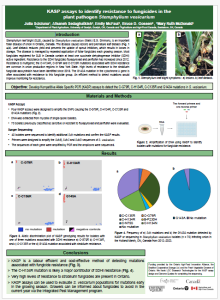
Stemphylium leaf blight (SLB) caused by Stemphylium vesicarium is the most common foliar disease of onion in Ontario, Canada. Management of SLB relies on repeated fungicide applications and most fungicides are in the succinate dehydrogenase inhibitor (SDHI) mode of action group. The strobilurin fungicide, azoxystrobin was applied regularly until very high resistance was confirmed in 2021. Both groups of fungicides have poor efficacy in the field. Isolates of S. vesicarium from New York State, classified as highly resistant to SDHI fungicides, frequently had one of three mutations, C-G79R, C-H134R and C-C135R, in the gene encoding succinate dehydrogenase subunit C (sdhC). Also, resistance to the strobilurin fungicides in New York State was associated with the G143A gene in cytochrome b. In the current study, Kompetitive Allele Specific PCR (KASP) assays were designed to detect the single nucleotide polymorphisms (SNPs) of C-G79R, C-H134R and C-C135R in sdhC and the G143A gene. The assays were tested on 70 isolates of S. vesicarium collected in Ontario from 2012-2023 that were previously classified as either sensitive or resistant to these fungicides. Resistant isolates were sequenced to detect additional mutations. Mutation C-H134R was identified in 29%, C-G79R in 7% and C-C135R in 3% of isolates. An additional mutation, C-H134N, was detected by sequencing in 23% of isolates. The G143A mutation was found in all 67 isolates collected after 2016. The KASP assays were fast and efficient. They are effective for monitoring fungicide resistance in S. vesicarium and could be developed for other fungi.
Mary Ruth McDonald mrmcdona@uoguelph.ca, Dept of Plant Agriculture, University of Guelph, Guelph, Ontario, Canada
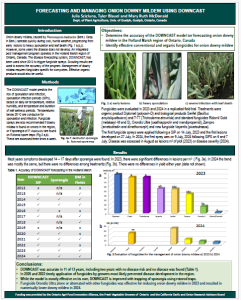
Onion downy mildew, caused by the oomycete Peronospora destructor, is a highly destructive foliar disease of onion. The disease does not occur every year in the Holland Marsh, Ontario, Canada, so disease forecasting can be very useful. Symptoms develop 10 – 14 days after infection and downy mildew specific fungicides must be applied prior to infection to be effective. The disease forecasting program DOWNCAST is used to time fungicide applications when there is disease risk. The IPM program operating in the Holland Marsh provides disease risk updates to local growers throughout the growing season. The risk of sporulation and infection, known as sporulation infection periods (SIPs), is based on daily air temperature, relative humidity, leaf wetness duration and temperature, plus temperature in the days following potential infection. Fungicide sprays are recommended when there are SIP’s or if disease symptoms are found on onions in the region. The presence of sporangia of P. destructor on rotorod traps is also an indication of high risk. From 2012 to 2024, the forecasting system was accurate in 11 of 13 years. Weather conditions were favorable for downy mildew in 2023 and 2024, and fungicide efficacy trials were conducted. The trials confirmed that Ridomil and Orondis Gold (mefenoxam S and oxathiapiprolin plus mandipropamid) were effective when applied at the first indication of disease risk. The DOWNCAST model alone was mostly effective and was improved with the trapping and same-day identification of sporangia. DOWNCAST continues to be a useful disease management tool for growers.
Adam Sisson ajsisson@iastate.edu, Iowa State University, Department of Plant Pathology, Entomology, and Microbiology, Integrated Pest Management Program, Ames, IA, United States
Fictional character Dr. Sebastian E. Bartholomew is a bumbling and pompous scientist who creates plant pest poetry and interviews experts as a non-traditional method to communicate integrated pest management (IPM) and bring attention to Extension resources. Multimedia outputs include full-length books such as At Field’s End and It’s Still Edible, X and Instagram accounts, and multi-format videos. Played by Iowa State University Extension Specialist Adam Sisson, Dr. Bartholomew believes himself to be quite talented, while everybody else knows otherwise. In “The Undergrowth,” Dr. Bartholomew interviews IPM specialists with humorous questions regarding their expertise such as “How many ticks does it take to kill a man?” and “Who milks the bees?” but also asks questions to help viewers understand the importance of the IPM specialist’s work. “The Undergrowth” consists of 24 videos with 11,200+ views, 225+ hours watch time, and 84,700+ impressions. Phytopoetry video outreach consists of Dr. Bartholomew reading poetry like “Cute Fluffy Soybean Slayer” and “Guts Like Guacamole.” Twenty-nine Phytopoetry videos have 5,900+ views, 81+ hours watch time, and 119,600+ impressions. Phytopoetry books include plant-related images and poetry such as “Real Crop Scouts Ride Dinosaurs” and “Flock of Mohawks.” On X, short poetry is used to draw attention to timely or important topics such as invasive pests and plant disease. Instagram posts use humor and video to present poetry about pests. X and Instagram accounts have a combined 1,285 followers. Access to The Undergrowth and Phytopoetry outputs can be found at https://linktr.ee/phytopoetry.
Adam Sisson ajsisson@iastate.edu, Iowa State University, Department of Plant Pathology, Entomology, and Microbiology, Integrated Pest Management Program, Ames, IA, United States
Accurate disease severity assessment is critical for fungicide evaluation or insect leaf defoliation, but visual estimation can lead to inconsistent results. Existing tools like standard area diagrams and interactive software may have training limitations that can be addressed with tactile 3D-printed tools. A tactile experience may increase understanding through interaction with physical 3D models. 3D models offer customization, flexibility, and an immersive learning experience. The Tactile Toolbox Working Group was developed through the North Central Integrated Pest Management (NC IPM) Center to better understand 3D printing needs and devise solutions. One goal was to enable non-experts to print 3D models for research and extension using low-cost printers and free models. As part of this project, a library of 3D models was developed and is online at https://resources.ipmcenters.org/view/?type=29. Models include corn and soybean leaves with differing amounts of insect defoliation and various diseases. People with 3D printers can download and print models for their own research or Extension uses. Eventually, the Tactile Toolbox library aims to be a repository for various 3D resources. As part of this project, a workshop was held at the 2024 NC American Phytopathological Society meeting to introduce approximately 40 participants to 3D printing basics. This included an introduction to the software required to develop 3D models, turning images into 3D models, and using the Tactile Toolbox library. This working group plans to continue development of 3D resources for crop scouts, researchers, and Extension workers on multiple plant pest issues.
Blake Wilson bwilson@agcenter.lsu.edu, LSU AgCenter, Department of Entomology
Two stem borers in the family Crambidae, the sugarcane borer, Diatraea saccharalis, and the Mexican rice borer, Eoreuma loftini, are the most economically damaging insect pests of sugarcane (Saccharum spp. hybrids) in Louisiana. Advances in integrated pest management strategies reduced reliance on insecticides for stem borer control in the Louisiana sugarcane industry from the 1970s until the early 2000s. More recently, optimization of chemical control, renewed reliance on resistant cultivars, and improved production practices have further reduced economic impacts of the two pests to US$8 million annually, less than 1% of the total crop value. Systemic activity of chlorantraniliprole provides up to ten weeks of protection, reducing the need for multiple insecticide applications in a single growing season. The negligible impact of this chemistry on key natural enemies allows for conservation biological control from two invasive predatory ants, Solenopsis invicta and Nylanderia fulva. Varietal resistance through a complex of mechanisms including rind harness and leaf sheath oppression has led to development of resistant cultivars with 80% reductions in borer injury relative to susceptible cultivars. Collectively, these efforts have greatly reduced spring D. saccharalis populations and the number of hectares requiring insecticidal protection. Despite the reduction in insecticide use, levels of borer injury at harvest are less than 1% bored internodes. Continued geographical expansion of the invasive E. loftini may lead to increases in insecticide use in the future, but recent observations suggest this borer can be managed using similar strategies to D. saccharalis.
Brian Eshenaur bce1@cornell.edu, Cornell University’s New York State Integrated Pest Management Program, Geneva, NY, USA
The invasive box tree moth (Cydalima perspectalis) poses a significant threat to boxwoods (Buxus spp.) in North America, impacting both landscapes and nurseries. Since its initial arrival in the United States from Canada into New York State, the box tree moth has spread, causing extensive defoliation and mortality in boxwoods, which are valued for their economic and aesthetic contributions to the horticulture industry. In response, the New York State Integrated Pest Management (NYSIPM) program has implemented a comprehensive approach utilizing outreach and collaborative partnerships to equip nursery operators, landscapers, and home gardeners to recognize and manage this new pest.
To support our work, a new website was created to share key information on box tree moth identification, monitoring, and management strategies. We also researched and created a NYS appropriate list of alternatives to boxwoods and established a demonstration planting with these boxwood substitutes. Additionally, a targeted social media campaign was launched to reach specific audiences within New York State.
Through online resources, presentations, workshops, and direct consultations, NYSIPM aims to mitigate the impact of box tree moth in the landscape and nursery industry while minimizing environmental consequences throughout New York State.
Allan Pinto afp68@cornell.edu, Cornell University, Department Applied Economics, NYS Integrated Pest Management
The Spotted Lanternfly (SLF), native to Asia, feeds on over 100 U.S. plant species. Since its detection in Pennsylvania in 2014, SLF has rapidly increased in density, economic impact, and geographical spread. Pennsylvania growers faced substantial losses early on, with some vineyards needing replanting due to vine death. As of early 2024, New York State (NYS) grape growers had not reported SLF-related issues. However, in July 2024, state agriculture officials confirmed the presence of SLF in the Finger Lakes region, alarming local grape growers as this was the first instance of SLF near commercial vineyards in the area. Despite its rapid spread, significant advancements have been made in cultural, biological, and chemical control strategies to manage and mitigate the risks and losses associated with SLF. This study aims to estimate the potential economic impact of SLF in New York State’s (NYS) two largest grape-growing regions. We hypothesize that NYS growers, learning from Pennsylvania’s experience, will adopt a risk-averse approach and be better prepared to combat SLF. Comprehensive information on SLF is crucial for informing growers, stakeholders, and policymakers about the potential economic losses in NYS grape production. If left uncontrolled, economic losses in the two largest grape production regions could reach $1.5 million, $4 million, and $8.8 million in the first, second, and third years of infestation. This highlights the urgent need for effective management to mitigate SLF’s impact on agriculture. Future research should establish economic thresholds and conduct cost-benefit analyses of pest control measures in NYS grape production.
Alfred Fournier fournier@cals.arizona.edu, University of Arizona, Department of Entomology, Tucson, Arizona, United States
Under the Federal Insecticide, Fungicide and Rodenticide Act, The Environmental Protection Agency (EPA) is required to review all registered pesticides to ensure that they pose no unreasonable adverse effects to human health and the environment. EPA’s risk assessments and proposed decisions are published in the Federal Register and are open for public comment. As part of the pesticide review process, EPA considers data that may influence their models of risk or understanding of pesticide benefits. Comments may include scientific data from researchers and extension specialists, along with practical information from growers and pest management experts working in the field to explain pesticide use patterns, benefits, and alternatives. Five network coordinators working in tandem with the Western Integrated Pest Management Center develop information from growers and other stakeholders throughout the West to inform comments submitted to the EPA. Network coordinators represent 17 states and territories in five sub-regions (California, Desert Southwest, Intermountain West, Pacific Northwest and Pacific Islands). We analyzed EPA’s responses to 95 comments submitted between 2012 and 2022. Results: 92% of submitted comments provided substantive data and were considered in the registration review process. For 22% of comments, EPA revised risk models or altered proposed decisions in ways that benefited growers while protecting public health and the environment.
Don Weber don.weber@usda.gov, USDA Agricultural Research Service, Invasive Insect Biocontrol and Behavior Laboratory
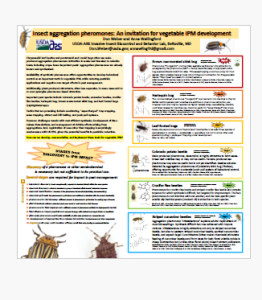
Chrysomelid leaf beetles and pentatomid stink bugs often use male-produced aggregation pheromones (attractive to males and females) to colonize hosts, including crops. Some important pests’ aggregation pheromones are already known and synthesized. Availability of synthetic pheromones offers opportunities to develop behavioral control as an important tactic in vegetable IPM, while reducing pesticide applications and negative non-target effects in pest management. Additionally, plant-produced attractants, often less expensive, in some cases add to or even synergize pheromone-based attraction. Important species include Colorado potato beetle, cucumber beetles, crucifer flea beetles, harlequin bug, and other species. Tactics that are promising include trap cropping, mass-trapping, attract-and-kill baiting, and push-pull systems. Let’s talk about developing new tools for vegetable IPM!
Tegan Walker twalker6@ncsu.edu, Center for IPM, North Carolina State University, Raleigh, NC, USA
Needs assessments are broadly used for assessing training needs and developing program objectives. Better understanding the IPM training needs of Extension agents leads to improved programmatic decision making and ultimately improved IPM adoption as Extension agents are critical to the dissemination of IPM practices. A Borich Model needs assessment not only asks participants to rank competencies based on their level of knowledge, but also how important each competency is for performing their job well. A weighted mean discrepancy score is calculated for each competency based on participants’ responses. Competencies can then be ranked to determine priority training needs to ensure the most relevant training is provided. The Borich Model needs assessment developed for this study assessed North Carolina Extension agents’ IPM training needs. Thirty-five IPM competencies were developed, covering six IPM categories: (a) Extension Master Gardener Volunteers, (b) Prevention, Avoidance, Monitoring, and Suppression, (c) Pest Identification, (d) Pesticide Safety, (e) Pesticide Use, and (f) Pollinators. The IPM competency scales created for this survey yielded high levels of reliability when using Cronbach’s alpha. This Borich Model IPM needs assessment instrument could easily be implemented in other Extension IPM programs across the United States and in other countries.
Timothy McDermott mcdermott.15@osu.edu, Department of Extension, Ohio State University, Columbus, Ohio, United States
There is an emerging animal health threat that may fundamentally change how we graze cattle in the United States for the foreseeable future. The invasive Longhorned tick has shown the ability to kill cattle as large as a full-grown bull from blood feeding, kill calves in as fast as five days on the animal, and transmit a protozoal disease, Theileria orientalis, which has no treatment, no vaccine, can exist in an asymptomatic carrier state, and has an estimated 5-10% fatality rate in cattle. The Longhorned tick was first discovered in high numbers on a farm in New Jersey in 2017. Since then, it has rapidly expanded to 21 states and Washington, DC, affecting most of the eastern half of the US. This tick spreads easily. It has been found on multiple migratory waterfowl including Canada geese. Once it finds a host and habitat, rapidly increasing due to global climate change, it can reproduce via parthenogenesis, where the female does not need to mate to lay her clutch of 2000 eggs. We will need to use all the tools in our IPM toolbox to address this threat to animal agriculture. This infographic will detail the state of Longhorned ticks in the US, the impact of Theileria in cattle, where to scout for ticks on the animal, forage and grazing management guidance, pesticide application impacts, and producer strategies to address this predator on both pasture and animals.
Tom Coleman tcoleman@usaid.gov, U.S. Agency for International Development, Bureau of Humanitarian Assistance, Office of Technical and Program Quality, Food Security and Livelihood Division, Agriculture Team, Washington, D.C., USA
For over 150 years, area-wide pest management programs, and subsequently named area-wide integrated pest management (AW-IPM) programs, have targeted numerous economic insect pests worldwide. AW-IPM programs systematically reduce the target pest(s) using various management strategies over large geographic areas, and have been implemented in diverse sectors, including forestry, veterinary, public health, row and field crops, and specialty crops, with the goal of eradication, prevention, or suppression. The U.S. Agency for International Development (USAID) collaborates with various countries and organizations to frequently implement AW-IPM programs to manage global emergency transboundary outbreak pests (GETOPs). The objective of this study was to assess the insect pests targeted, the IPM strategies utilized, and the general gaps in AW-IPM programs throughout the world. Peer-reviewed literature, pest databases, and pest program reports addressing AW-IPM programs were reviewed to capture specific program data (e.g., species targeted, host impacted, program objective, region, IPM strategies, area treated, etc.). This assessment can highlight regional pest management issues; compare the IPM tactics used to manage insect pests throughout the world; address environmental and non-target impacts associated with these treatments; and identify management and research gaps for developing pest programs.
Kayla Watson knpack@ncsu.edu, Southern IPM Center, North Carolina State University, Raleigh, NC
IPM encompasses many settings, disciplines, and people, but this fact is not always apparent. This program aims to form a cohesive, harmonized, and collaborative IPM network through a communication campaign called, “This is IPM.” This effort includes a dedicated website and social media channels with information about IPM, including its process, the people who practice it, and resources for those that want to know more about the discipline.
Janet Knodel janet.knodel@ndsu.edu, North Dakota State University, Department of Plant Pathology, Fargo, ND, United States
North Dakota soybean production has increased over 60 times from 1980 to 2023 and today North Dakota ranks #4 in U.S. soybean acres. Insect pest management is a critical part of an Integrated Pest Management (IPM) program for successful soybean production. As part of the IPM Crop Survey program of North Dakota, scouts and Extension Specialists have scouted soybeans annually for two key insect pests: soybean aphid (Aphis glycines) and bean leaf beetle (Cerotoma trifurcata), and more recently for two new insect pests, soybean gall midge (Resseliella maxima) and soybean tentiform leafminer (Macrosaccus morrisella). Economic populations of soybean aphids are cyclical depending on the weather and other factors. However, populations of pyrethroid-resistant soybean aphids have increased, especially near the Red River Valley area. Sweep net samples and defoliation estimates of bean leaf beetles have shown increased prevalence, and this pest has spread further west and north in North Dakota. Soybean gall midge was first detected in Sargent County in one field in 2022, and no additional infestations have been observed since 2022. Soybean tentiform leafminer was first detected in 2023 in five counties and again in 2024 in four new counties of North Dakota. The changing insect pest complex demonstrates the importance of proper identification and routine monitoring of insect pests as part of an IPM crop program.
Janet Knodel janet.knodel@ndsu.edu, North Dakota State University, Department of Plant Pathology, Fargo, ND, United States
Canola flower midge, Contarinia brassicola (Diptera: Cecidomyiidae), was first discovered infesting canola (Brassica napus and B. rapa) in Saskatchewan and Alberta, Canada in 2014 and 2015. Larvae injure the canola flowers by causing a bottle-shaped gall, which prevents flowers from opening. Damaged flowers do not produce pods or seeds. Scentry LPD pheromone traps were monitored for adult flies in 81 canola fields in 21 counties of North Dakota during 2020-2024 and three fields in one county of Minnesota during 2023 and 2024. Canola flower midge was trapped in 44% of the fields in 10 counties in ND and one county in Minnesota. Over the past year, its distribution has been slowly expanding further south to more canola producing areas of North Dakota. A total of 2,842 canola flower midges were captured over the trapping period. No economic yield loss has been observed in pods or recorded by extension specialist or canola growers in the U.S. yet. Future trapping efforts and field observations will be essential for early detection of this new insect pest of canola in North Dakota and Minnesota.
Jacob Leeser jl4353@cornell.edu, New York State Integrated Pest Management
This poster presents an overview of the New York State Integrated Pest Management (NYSIPM) program’s efforts to mitigate the spread and impact of the invasive Spotted Lanternfly (SLF), Lycorma delicatula, which has been rapidly advancing across New York since its first sighting in 2020. Highlighting a multi-pronged approach, the NYSIPM program has partnered with Cornell University researchers, grape extension specialists, and various stakeholders to address SLF’s potential threat to the state’s agriculture.
Key strategies include early detection initiatives and extensive outreach campaigns to educate New York residents, grape growers, and vineyard workers. The program manages a dynamic online mapping tool, which has become the default U.S. distribution map for SLF. Additionally, extensive digital and media outreach has reached hundreds of thousands of residents, including Spanish-speaking field crews and historically underserved communities, like the Amish and Mennonite populations.
The poster also outlines collaborative SLF summits and workshops organized by NYSIPM, which engage over 800 educators and regulators nationwide. Resources for the public and professionals are readily available on the NYSIPM website, a central information hub. This comprehensive approach underscores the necessity of cross-sector partnerships, education, and readily accessible resources to manage the ongoing SLF invasion and safeguard New York’s agricultural economy.
Anna Wallis aew232@cornell.edu, NYSIPM Cornell AgriTech, Hudson Valley Research Lab, Highland, NY, United States
Spotted wing drosophila (SWD) is an invasive pest that has devastated berry and stone fruit crops across North America. Monitoring is critical for initiating spray programs to ensure adequate crop protection, while mitigating effects of pesticides. A statewide monitoring network has been in place in New York since the introduction of SWD. In 2023-24 we developed a new map, blog, and data entry platform to more efficiently report to growers, including over 40 sites across the state. Weekly blog posts alerted growers in real time of the presence of SWD.
In addition, we evaluated different trap types for efficacy and ease of use over two seasons. Both Scentry jar (drowning) traps and Trécé red sticky cards, baited with their respective lures, were deployed at berry or cherry plantings across New York State. At each site, two of each trap type were placed along the edge, spaced 50 meters apart. Traps were monitored weekly through the season and the number of SWD recorded. In 2022, jar and sticky trap detection dates were the same at 6 of 19 locations (31.6%), jar traps earlier at 9 (47.4%), and sticky traps earlier at 2 (10.5%). In 2023, detection was the same for 5 of 17 locations (29.4%), jar traps earlier at 8 (47.1%), and sticky traps earlier at 3 (17.6%). Our results indicate that both trap types provide similar detection, offering options for growers.
Adhikrao Jadhav dradjadhav@yahoo.co.in, Department of Entomology, BVs LMK College of Agriculture and College of Horticulture,Kadegaon ,MS, India
Campoletis chlorideae Uchida is a renowned biocontrol agent for Helicoverpa armigera (Hubner) and other lepidopteran insects. It has also been observed to parasitize Spodoptera frugiperda (J. E. Smith). The study was conducted in Karveer taluka of Kolhapur district, Maharashtra, India across the winter season (2018), summer season (2019), and monsoon season (2019) to assess the prevalence of Campoletis chlorideae in maize. During the winter season of 2018, the highest percentage of parasitism (91.78%) was recorded on the 47th SMW in November 2018. In the summer season of 2019, the highest percentage of parasitism (64.38%) was observed on the 9th SMW in March 2019. The highest level of parasitism, reaching 85.11%, was recorded on the 29th SMW (July 2019) during the monsoon season of 2019. The level of parasitism exhibited a significant correlation with both the maximum and minimum relative humidity, showing a positive correlation. Conversely, a significant inverse relationship was observed with the maximum temperature.
Melanie Kalischuk mkalisch@uoguelph.ca, University of Guelph, Department of Plant Agriculture, Guelph, Ontario, Canada
Recently, there was an epidemic in the eastern portion of North America involving an aggressive species of Neopestalotiopsis that caused catastrophic consequences to the strawberry industry. Currently, there are few integrated pest management options for this devastating disease. During 2020 to 2022, commercial fields across Ontario were monitored for Neopestalotiopsis-like disease symptoms. The survey revealed 31% of all samples tested positive for N. spp. and of this, 90%, 4%, and 6% were identified as aggressive species, Neopestalotiopsis rosae and a new unidentified species within the genus, respectively. RNA interference (RNAi) was used to evaluate differences in response of these species to the cytochrome P450 paralogues CYP51A, CYP51B and mixture CYP51AB. CYP51B and CYP51AB provided the most effective RNAi responses to the aggressive species and N. rosae. These targets provided 15% and 13% inhibition rate relative to the empty vector RNAi negative control for three days post pathogen inoculation for the aggressive species and N. rosae, respectively. RNA interference against the new species was most effective with CYP51AB. This target provided a 15% inhibition rate relative to the empty vector RNAi negative control for five days post pathogen inoculation. The overall RNAi responses at the end of the experiment provided pathogen inhibition rates of 39%, 47%, and 46% for the aggressive species, N. rosae, and new species, respectively. Further optimization of this platform will lead to RNAi preventative methods that can be utilized to reduce the impact of this emerging pathogen and offer alternative options to manage this destructive Neopestalotiopsis disease.
Rory Tevlin rhtevlin@ipminstitute.org, Sustainable Food Group – IPM Institute of North America Inc., Madison, WI USA
Pollinators are crucial to global food security, with nearly 75% of major crops depending on them. However, pollinator populations face significant threats, including climate change, pesticide use, and habitat loss.
With growing consumer, NGO, and stakeholder concerns about pollinator decline and the risks associated with pesticide use, food retailers are responding by implementing pollinator protection within supply chain policies—particularly through Integrated Pest Management (IPM) practices.
This poster will explore the IPM certification requirements set by major retailers to safeguard pollinators and biodiversity. Leading retailers like Walmart, Whole Foods Market, Kroger, and Giant Eagle are requiring fresh produce suppliers to adopt IPM practices, verified through third-party certifications, by 2025. In August 2021, Walmart became the first retailer to publicly commit to a policy and certification requirement, initiating a broader trend among the other retailers.
Each retailer’s policy provides an accepted list of certifications, and while many are recognized by all four retailers, there are key differences to reflect each policy’s unique criteria. Policies also encourage—but do not always require—the phase-out of high-risk pesticides like neonicotinoids and chlorpyrifos.
This poster will highlight the overlap in certification requirements, explain the role of IPM in minimizing pesticide risks to pollinators, and illustrate how, and why, retailers are leveraging IPM to protect biodiversity while maintaining food production sustainability. With increasing consumer demand for sustainable practices, these retailer policies signal an important industry-wide shift in how agricultural supply chains address environmental risks and promote pollinator health.
Ryan Adams rsadams3@ncsu.edu, Center for IPM, North Carolina State University, Raleigh, NC
The Southern Region Information Exchange Group for IPM (SERA3) is part of the multistate research program whose mission is to enable efficient and comprehensive research on high-priority topics. SERA3 brings together IPM research and Extension professionals on an annual basis to exchange innovative IPM research and Extension knowledge. SERA3 also provides leadership for the development of IPM priorities for the Southern region. These priorities are published on an annual basis and highlight IPM research and Extension needs in the region. The criteria for the selection of IPM priorities are a) strong stakeholder identified need, b) address economic, environmental, and/or human health issues, and c) relevant in two or more states or territories in the Southern region. The priority list is developed by SERA3 and then distributed to IPM stakeholders throughout the region via an online ranking survey. Survey results are then aggregated and normalized to create the top regional priorities for that year. The SERA3 IPM priority document is published on the Southern IPM Center’s website.
Margaret Lewis lewis.3230@osu.edu, Department of Entomology, The Ohio State University, Columbus, OH, USA
Abiotic climate stressors can modulate tritrophic interactions in myriad ways. Climate-driven shifts in host plant quality often influence insect herbivore fitness. In addition to directly impacting pest population dynamics, these changes sometimes extend to natural enemies through shifts in the availability or quality of prey items. Using soybean aphids (Aphis glycines) as a model system, we investigated how one abiotic stressor associated with global climate change, flooding, alters tritrophic interactions between aphids, soybeans, and a parasitoid wasp (Aphidius colemani). Greenhouse experiments were conducted using two soybean aphid populations: a virulent biotype that is adapted to survive on aphid-resistant soybean varieties and an avirulent biotype that is susceptible to aphid-resistant soybean. Overall, flooding negatively impacted avirulent aphid fitness only. We observed decreased fecundity and population growth rates in avirulent aphids when they were reared on flooded soybean, while virulent aphids exhibited no phenotypic response to flooding, a fitness differential that could facilitate the spread of virulence as climate change effects intensify. Flooding also impacted parasitoid wasp performance. No differences in mummy formation rates were observed across any treatments, but adult parasitoid emergence rates and female wasp sex ratios were higher from aphid mummies on flooded soybeans, regardless of aphid biotype. These results highlight the potential for host plant water stress to alter soybean aphid population dynamics in complex ways. Enhanced parasitoid performance under flooding conditions may improve aphid suppression, although further work will be necessary to directly link parasitoid-host interactions with changes to aphid population dynamics.
Ana Lima asantanalima2@unl.edu, West Central Research, Extension, and Education Center, University of Nebraska-Lincoln, North Platte, NE USA
The western corn rootworm (WCR), Diabrotica virgifera virgifera, is one of the most destructive pests of corn in North America. WCR control includes crop rotation, transgenic corn, and soil-applied insecticides. However, this pest can develop resistance to these methods. Therefore, additional control strategies, including biological control, should be considered. Entomopathogenic nematodes (EPN) could be an approach to control WCR; however, it is important to study their potential effects on non-target organisms. In this study, we assessed the potential of EPNs for controlling WCR and their impact on its predators. A mix of two species of EPNs, approximately 18 million infective juveniles per acre of Heterorhabditis bacteriophora and Steinernema feltiae, was applied to plots planted with Bt and non-Bt corn. Soil samples were taken before and after EPN applications to assess their establishment in the field; nematodes recovered from white traps were identified by molecular sequencing. The emergence and feeding damage of WCR and the diversity and abundance of predatory arthropods were assessed. The application of EPNs did not reduce the number of WCR adults or root damage; however, these parameters did differ between Bt and non-Bt corn. Despite variations throughout the crop season, no effect of EPNs on the population of predatory arthropods was observed. This study will be repeated in the second and third year to better understand the establishment of EPNs and their effects against WCR and non-targets predators, to better evaluate the use of EPNs as a long-term approach for WCR management.
Desiree Wickwar desireewickwar@uidaho.edu, University of Idaho, Kimberly Research and Extension Cetner, Kimberly, ID USA
Pest monitoring programs play a crucial role in helping agricultural producers and homeowners move away from calendar-based pesticide applications. By providing accurate, timely, and location-specific data on pest presence and activity, these programs allow for better timing of pest control applications, which can reduce unnecessary pesticide use and improve pest management efficacy. In Idaho, several pest monitoring networks support Integrated Pest Management (IPM) efforts by providing stakeholders with actionable information and specialist guidance. Key programs, such as the PNW Pest Alert Network and the Idaho Pest Monitoring Dashboard, offer real-time data to guide pest management actions, contacting nearly 5000 individuals each year. Monitoring programs support decisions in the state’s top crops such as potatoes, sugar beets, cereals, and legumes, while also providing information on urban pests. Stakeholders routinely report that they use these monitoring networks to inform their pest management (80%), and see reduced pesticide applications (34%) as a result of participation in these pest monitoring programs. This poster will report on key findings and impacts of Idaho pest monitoring programs, highlighting finds and impacts from potato psyllid and zebra chip disease monitoring.
Dwayne Joseph dwaynej@umd.edu, University of Maryland Extension, Chestertown, MD, USA
Effective weed management in vegetable production often requires strategies tailored to control weeds both within and between crop rows. This study evaluated different approaches for each area, utilizing red clover as a living mulch (LM) for weed suppression between rows in combination with three strategies for in-row management: strip tillage, a cereal rye cover crop as a dying mulch, and biosolarization. Biosolarization, a soil disinfection technique, has been shown to increase weed seed mortality and reduce soil pathogens. Our objectives were to assess the efficacy of biosolarization, conservation tillage, and cover cropping to 1) reduce pest pressures (weeds and insects), and 2) enhance crop yield. The study, conducted on organically managed okra and summer squash at the Central Maryland Research and Education Center, Upper Marlboro, MD, included four treatments with four replicates each. Okra and summer squash were grown in: 1) a red clover living mulch with no-till (LM-NT), 2) a strip-rotovated row interplanted with cover crops (LM), 3) solarized soil (Sol), and 4) biosolarized soil interplanted with cover crops (Biosol). Results showed that weed totals were significantly affected by treatment and row position (within or between row). The LM-NT treatment provided the most effective weed control between rows, while Biosol demonstrated the best within-row weed suppression. These findings suggest that biosolarization, with its ability to reduce weed seed viability and emergence, can be a valuable tool for within-row weed management. In organic production, integrating biosolarization with complementary practices, such as living mulches, offers a promising strategy for achieving effective weed control.
William M. Wintermantel bill.wintermantel@usda.gov, USDA-ARS, Sam Farr United States Crop Improvement and Protection Research Center, Salinas, California, USA
Virus diseases impact cucurbit production throughout the United States (U.S.) and world, reducing fruit quality and producer profits. During the past 25 years, cucurbit viruses have been introduced into and spread throughout the U.S. at an alarming rate, and most production areas are now impacted by numerous viruses, which often occur in mixed infections, complicating management. Integrated pest management is critical for cucurbit virus management and begins with knowledge of virus threats, epidemiological factors that influence disease development, and effective management methods. Increased stakeholder knowledge and information exchange throughout the U.S. cucurbit industry is necessary to improve virus disease management, including limiting virus spread. The Emerging Viruses in Cucurbits Working Group (EVCWG) was established in 2022 “to improve communication and knowledge about viruses across the cucurbit industry and develop strategies to successfully identify and mitigate virus threats to cucurbit production in the United States.” EVCWG members meet regularly to identify existing cucurbit virus threats, risk factors for virus establishment and spread, and actions necessary for improved virus mitigation, including research, development of diagnostic assays, and outreach. Stakeholder education and information distribution and exchange are achieved through the maintenance of an EVCWG website, eCucurbitviruses.org, production of fact sheets and other educational resources (e.g., postcards and videos), delivery of presentations to stakeholders, and hosting of webinars and open meetings. These efforts to unify and improve virus management across the cucurbit industry will help safeguard sustainable cucurbit production in the U.S. and strengthen the cucurbit industry in the U.S. and throughout the world.
Bryan Brown bjb342@cornell.edu, New York State Integrated Pest Management, Cornell University, Ithaca, NY, USA
Weed management in organic winter squash is often challenging because of the long growing season. Many growers use mechanical cultivation or plastic mulch. Smaller farms sometimes use loose mulches such as straw to suppress weeds. And New York farmers were interested in the potential use of roller crimped cereal rye as mulch. We tested these four strategies in a side-by-side systems comparison in 2021 and 2022. Weed management was effective in all but the rolled rye treatment. Levels of powdery mildew, aphids, beneficial insects, squash bugs, and striped cucumber beetles generally followed yields, with larger plants supporting higher pest levels. But the straw mulch treatment trended toward less powdery mildew and more squash bug incidence. Pitfall trapping found the most ants in rolled rye and cultivation treatments. Carabids and harvestmen were found in greater numbers in the cultivation treatment. Rove beetles were greatest in plastic mulch. And rolled rye contained the most slugs and spiders. Subplots sprayed with organic insect and disease protectants following IPM thresholds had minimal effects on pest levels and pitfall trap results, but did significantly improve marketable yields. Total yield and marketable yield were greatest in the plastic mulch treatment followed by cultivation and straw mulch. Rolled rye resulted in unacceptable yields. Labor and materials costs were greatest for the straw mulch system. Net profits were greatest in the IPM subplots of the plastic mulch and cultivation treatments.
Karey Windbiel-Rojas kwindbiel@ucanr.edu, University of California Statewide Integrated Pest Management Program, Davis, CA USA
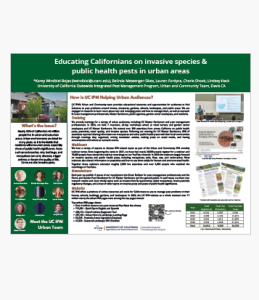
In California, nearly 95% of the population lives in urban or suburban areas. It is inevitable that they will encounter pests, especially those of public health significance such as cockroaches, rats, bed bugs, and mosquitoes, some of which may also be considered invasive. It is also likely that many will choose to manage these pests themselves using pesticides or hire a company to manage them.
The Urban & Community team with the University of California Statewide IPM Program (UC IPM) works to educate urban audiences as well as the professionals they may hire, on integrated pest management (IPM). In 2024, the program focused outreach and educational efforts on invasive species, public health pests, and pesticides to safeguard the health and wellbeing of urban Californians and protect our ecosystems.
In 2024 the UC IPM program provided
• Training for UC Master Gardener volunteers on IPM, public health pests, invasive species, and pesticides
• Training for retail nursery and garden center employees on invasive species, pesticides, and IPM
• Monthly webinars for the public covering topics ranging from biological control to invasive species. These webinars were recorded and are available on the UC IPM YouTube channel.
• Webinars and other training activities for landscapers, school grounds crews, public housing and structural pest management professionals on public health pests and invasive species
• Invasive pest online courses in collaboration with UC Statewide Master Gardener program
• Six issues of newsletters for the public and for pest management professionals covering timely pest management topics including invasive pest spotlight articles
Jacqueline Kowalski kowalski@uconn.edu, University of Connecticut, Extension, Bethel, Connecticut, USA
As urban agriculture grows, so do unique integrated pest management challenges, particularly in light of climate change. Urban agriculture spaces such as community farms often support various types of programs with multiple stakeholder groups working on the piece of land. Some of these programs include community gardens, youth training programs, and/or farm incubator programs. Different entities have different motivations, thresholds for pest damage, and philosophies on managing pest and disease issues. This poster will discuss various strategies Extension professionals can provide for technical support such as demonstration areas, on-farm research, presenting information on the use of weather data for decision-making, pesticide safety education, and assistance with developing IPM site plans.
Jacqueline Kowalski jacqueline.kowalski@uconn.edu, University of Connecticut, Extension, Bethel, Connecticut, USA
Connecticut is a densely populated, geographically small, highly urbanized New England state with a modestly sized Extension system that does not receive county funding. This situation raises the question of how to meet the population’s Integrated Pest Management (IPM) needs with limited capacity. This poster describes how the University of Connecticut IPM Team approaches this work by developing meaningful, trusted partnerships that advance regional and national IPM goals and through strategic projects with local, regional, and national impact. Some examples of this work include
• Collaboration with the Federally Recognized Tribes Extension Program (FRTEP), a partnership with the Mashantucket Pequot Tribal Nation (MPTN), to increase food security and encourage appropriate pest management strategies.
• Development of the Native Plant Availability Guide, created through a partnership with the Connecticut Department of Energy and Environmental Protection’s Division of Wildlife, which helps professionals and residents locate native plant material from CT retail and wholesale nurseries.
• Participation in multi-state urban farm trapping networks to create better tools for urban pest management.
• Development of short courses for targeted populations such as greenhouse growers, turf managers, and fruit/vegetable growers.
The UConn Integrated Pest Management (IPM) Program is a collaboration between the Department of Extension and the Department of Plant Science and Landscape Architecture. Since its inception in 1980, the UConn IPM Program has made great strides in developing and implementing sustainable methods for pest control throughout Connecticut.
Christopher Greer cagreer@ucanr.edu, University of California, Agriculture & Natural Resources, Statewide IPM Program, San Luis Obispo, CA, USA
Fusarium wilt of celery, caused by the soil-borne pathogen Fusarium oxysporum f. sp. apii (Foa), has been a persistent challenge for celery growers in California. Two races of the pathogen are documented in California. Foa race 2 is widespread throughout celery-growing regions of California, typically causing yellowing and stunting of established plants, resulting in failure to produce marketable heads. Foa race 4 was identified in Ventura County in 2013 and by 2022 had displaced race 2 as the predominant race causing celery losses in Ventura County. Foa race 4 is more aggressive than race 2, often causing plant stunting and death within weeks after planting, especially when temperatures are high. Field trials to evaluate resistance were conducted in two coastal California locations naturally infested with Foa: Santa Maria (race 2) and Camarillo (race 4). At Santa Maria in 2022, there was minimal plant mortality, but most entries exhibited some stunting and vascular symptoms in roots and crowns. Many entries did not produce marketable celery due to stunting. Entries exhibiting the lowest disease severity produced the heaviest stalks with the longest petioles. At Camarillo in 2022, there was rapid disease development of Foa race 4 induced symptoms. Six weeks after planting, 23 of 42 entrees exhibited 80-100% plant mortality. However, five entries had disease severity scores of 1.0-1.5 and less than 15% mortality. These more tolerant lines produced marketable celery. These results contribute to the development of Foa-resistant breeding lines and inform growers about the performance of cultivars in local conditions.
David Held dwh0004@auburn.edu, Auburn Department of Entomology and Plant Pathology, Auburn, AL, USA
Since the first detection in Texas 10 years ago, crape myrtle bark scale has spread to many states including Alabama. Our program has investigated conservation biological control, pollinator impacts, ecological impacts, and alternative chemical controls. This work has identified that systemic insecticides created hazardous conditions for pollinators foraging in flower in the first bloom after application. The use of limonene and visual attractants for lady beetles provide alternatives to systemic insecticide applications.
Daniel Olmstead dlo6@cornell.edu, Cornell Integrated Pest Management, Cornell University, Geneva, NY, United States
For decades, the Network for Environment and Weather Applications (NEWA) has provided farmers with data-driven insights to support sustainable pest and crop management. Now, NEWA is evolving its mission to extend beyond traditional agriculture and embrace opportunities in underserved communities, urban agriculture, and emerging industries. This expanded vision includes innovative applications in remote sensing, microclimate monitoring, and accessible technology, all aimed at making pest management information more widely available. In collaboration with startups and technology partners, NEWA is poised to develop scalable tools that bridge the gap between advanced weather data and the practical needs of diverse growers. These business partnerships will position NEWA as an incubator for emerging technologies that improve forecasting, resource management, and resilience to climate variability. Looking ahead, NEWA is committed to making these tools accessible to historically underserved communities, fostering a more resilient and adaptable agricultural landscape across New York and beyond. By broadening its scope, NEWA will empower a wide range of growers with locally relevant and practical pest management resources that support sustainable practices and community resilience.
James Jasinski jasinski.4@osu.edu, Ohio State University, Department of Extension, Urbana, OH USA
The United States pumpkin crop, encompassing both jack-o-lantern and processing varieties, covers 99,413 acres and is valued at over $286 million (Agricultural Census 2022). Nine of the 13 largest pumpkin-producing states are in the Midwest, Northeast, Mid-Atlantic, and Southeast regions. A new 72-page pumpkin production guide, created by 13 specialists from Ohio State University, Michigan State University, and Cornell University, compiles the latest research and demonstration trials to promote modern production techniques and integrated pest management (IPM) practices. The guide includes chapters on mechanical weed control, cover crop strategies, pollinator protection, and the potential negative interactions of specific pesticide combinations, such as fungicides and insecticides. It also addresses fundamental topics like weed, insect, and disease management, identification, and the role of beneficial natural enemies in production fields. A pumpkin enterprise budget is included to help growers assess profitability. Additional features include 176 full-color images, accessible explanations, and 92 QR codes linking to supplementary resources such as factsheets, bulletins, websites, and videos from experts nationwide. Although tailored for growers in the Midwest, its principles are broadly applicable to those in the Northeast, Mid-Atlantic, and Southeast. This publication may also serve as a model for future crop-specific guides.
Ahmadreza Mobli amobli@wisc.edu, University of Wisconsin-Madison, Madison, WI USA
Understanding weed emergence patterns is crucial for implementing timely and effective control measures, ensuring interventions target weeds at their most vulnerable stages. This is particularly critical for managing waterhemp (Amaranthus tuberculatus), a problematic weed with an extended emergence window throughout the growing season. This study examined the effects of tillage practices and cover crop integration on the temporal and spatial emergence patterns of waterhemp across a latitudinal gradient, including Wisconsin, Illinois, Arkansas, and Texas. We hypothesized that tillage practices and the use of cereal rye (Secale cereale) as a cover crop would influence waterhemp seedling emergence. The study, conducted in 2023 and 2024, used a split-plot design with three main tillage treatments: (1) fall tillage followed by spring tillage, (2) fall tillage only, and (3) no-tillage, combined with subplot treatments of cereal rye versus fallow. Preliminary results from 2023 showed that fall tillage followed by spring tillage encouraged earlier and more rapid waterhemp emergence, while cereal rye extended the emergence period. Regional variations were observed in the effects of tillage. In northern regions (Wisconsin and Illinois), fall tillage facilitated gradual and consistent emergence. In southern regions (Arkansas and Texas), it delayed emergence and concentrated it into a shorter timeframe, especially without cereal rye. No-tillage combined with cereal rye significantly delayed emergence and expanded the emergence window across a broader range of growing degree days (GDD), particularly in southern locations. Overall, cereal rye reduced waterhemp emergence in most locations, with the exception of Wisconsin. These findings demonstrate that integrating tillage practices with cereal rye cover crops can effectively modulate waterhemp emergence patterns, offering region-specific strategies for improved control. Future research should explore the long-term effects of these practices on waterhemp seed viability and emergence dynamics.
Michael Hunter meh27@cornell.edu, Cornell University New York State Integrated Pest Management Program Geneva, New York, United States
The Environmental Protection Agency (EPA) has proposed mitigation measures to reduce the risks of atrazine runoff to aquatic plant communities. These measures include restrictions on application timing and rates, as well as lowering the maximum allowable use rates in field corn. Atrazine has been a cornerstone of preemergence weed control in New York field corn, where growers have traditionally used rates higher than those proposed in the EPA’s anticipated label changes. This poses challenges for no-till and reduced-tillage systems, which rely heavily on herbicides for early-season weed management. There is uncertainty about whether reduced rates of atrazine—or omitting it altogether—can provide effective weed control without increasing costs or compromising efficacy. This multiyear, on-farm research trial evaluated corn herbicide programs with and without atrazine. Treatments included Acuron Flexi, Harness MAX, Resicore XL, and Verdict plus Outlook. Each site featured an untreated control and 16 herbicide programs combining preemergence (PRE) herbicides at various rates, including atrazine-free options. Herbicide rates were adjusted based on soil texture and organic matter. All field sites were tilled, and treatments were applied within three days of planting. Two years of data from three farm locations demonstrated that excellent corn weed control was achievable regardless of atrazine rates or its inclusion. These preliminary results suggest that corn growers could potentially reduce input costs and chemical usage without compromising weed control efficacy. Confidence in these findings will increase with further testing across additional years and locations.
Shufang Tian sftian@ucanr.edu, University of California, Agriculture and Natural Resources, Davis, CA USA
Small-scale farms are a vital component of California’s agricultural landscape. According to the USDA 2022 Census of Agriculture, 69% of the state’s 63,134 farms are small family operations with annual sales under $100,000. These farms face unique challenges in pest management, compounded by language barriers, as many farmers have limited English proficiency and speak languages such as Spanish, Hmong, Iu Mien, Chinese, and Korean. Our project, a collaboration between UC IPM and UC Small Farms, aims to address integrated pest management (IPM) priorities and develop extension methods tailored to historically underserved small farmers. Key topics include basic IPM principles, pest identification, pesticide safety, and updates on government and state regulations. Additionally, we will create training materials to help farmers prepare for the required retesting of the Private Applicator Certificate. Extension resources will include fact sheets, blogs, newsletters, infographics, and videos, all produced in multiple languages to meet the diverse needs of California’s farming communities. The project’s outcomes will promote the adoption of IPM practices, helping small-scale farmers manage pests safely, effectively, and sustainably.
Tarai Nacer tarainacer@yahoo.fr, University of Biskra, Algeria
To reduce the impact of chemical insecticides on greenhouse pests, a study was conducted at the Biskra oasis targeting the whitefly Bemisia tabaci (Homoptera: Aleyrodidae), one of the most destructive pests affecting greenhouse tomato crops. The study evaluated the efficacy of Ruta chalepensis (Rutaceae) plant extracts applied on the first, second, and sixth days of treatment. Three types of extracts were tested: seed extract, seed oil extract, and dry leaf extract, each at three concentrations (0.25, 0.5, and 1.0 ml/ml). The extracts were applied to various larval stages and adult whiteflies under laboratory and field conditions during the autumn and winter of 2023. The results showed that mortality rates increased with higher extract concentrations, particularly in the first and second larval stages. These findings suggest that Ruta chalepensis extracts have potential as an effective, environmentally friendly alternative for controlling B. tabaci in greenhouse tomato production.
Rufus Isaacs isaacsr@msu.edu, Michigan State University, Department of Entomology, East Lansing, MI USA
Since the first detection of spotted-wing Drosophila (Drosophila suzukii, Diptera: Drosophilidae) in Michigan, the pest has disrupted existing integrated pest management (IPM) programs, particularly through the increased use of chemical controls to protect blueberries. To address this challenge, collaborative efforts have been undertaken to develop tools that minimize the impact of this invasive insect across affected crops. These efforts encompass chemical, cultural, biological, and genetic management approaches, each at varying stages of development—from widely adopted practices to experimental techniques. This poster highlights our program’s research aimed at developing and implementing sustainable management strategies for D. suzukii. Our focus is on reducing reliance on insecticides while enabling growers to meet market quality standards. Key advancements include recent inundative releases of figitid wasps as biological control agents, assays to detect pesticide resistance and associated genetic markers, and the development of a fruit sampling method to guide pesticide spray decision-making.
Megha Parajulee m-parajulee@tamu.edu, Texas A&M University, Department of Entomology, Texas A&M AgriLife Research Center, Lubbock, TX, USA
Over the past 30 years, integrated pest management (IPM) strategies for corn have relied heavily on Bt technology, supplemented by insecticide applications, with minimal investment in native resistance. Genes from the wild relative Tripsacum offer an opportunity to expand the genetic diversity of U.S. corn production and introduce native resistance to insects and diseases absent in cultivated corn germplasm. Native resistance has the potential to enhance the effectiveness of Bt genes and extend the lifespan of Bt technology. A three-year study was conducted to develop an improved IPM strategy, transitioning from a Bt-centered approach to a more sustainable IPM framework for corn production in a corn-cotton agroecosystem. The study evaluated 10 corn hybrids, representing four resistance modes: Native-Resistant, Native-Susceptible, Native-Resistant + Bt, Native-Susceptible + Bt, and two commercial checks. Hybrids were planted adjacent to a cotton field in a split-split-plot randomized design, with irrigation water levels as the main plot factor, native resistance as the subplot factor, and Bt resistance as the sub-sub-plot factor, replicated three times. Leaf-feeding damage from fall armyworm was assessed using the Davis et al. (1992) 1–9 scale, where 1 indicates no damage and 9 represents severe damage with whorls and furls mostly destroyed. The study characterized the expression of Tripsacum-derived native resistance against fall armyworm, quantified the combined effects of native resistance and Bt traits on reducing leaf damage during vegetative growth, and measured reductions in mycotoxin accumulation in grains under diverse production conditions in the Texas High Plains. This research aims to empower producers with strategies to optimize resource inputs and achieve sustainable field crop production.
Jules Beyer beyerju@oregonstate.edu, Oregon IPM Center, Oregon State University, USA
POSTER COMPETITION ENTRY – Bachelors
An improved understanding of both when and where to expect invasive species can support early detection programs and other efforts to control invading populations. We developed and evaluated the predictive performance of a model for spotted lanternfly (SLF), Lycorma delicatula, for use in the DDRP (Degree-Days, Risk, and Pest event maps) platform. DDRP is a spatial modeling platform that was designed to produce timely predictions of the phenology and risk of establishment (based on climatic suitability) of invasive insect pests. We are using DDRP to produce regularly updated forecasts for 18 invasive insect species including SLF for the continental U.S., available at http://uspest.org/CAPS. The primary objective of this study is to provide decision-makers with accurate and timely forecasts of the appearance of SLF nymphs and adults to help guide decision-making related to surveillance and management. We used thousands of occurrence records and phenological observations to validate the model. Overall, the model exhibited strong performance. Climate stresses were insufficient to exclude SLF from most of the U.S.; however, an inability for SLF to complete its life cycle may reduce the likelihood of establishment for cooler areas. Forecasts for SLF are also available at the USA National Phenology Network at https://www.usanpn.org/data/forecasts, where end-users may submit phenological observations to help us further improve the model.
Nandini Das ndas@vt.edu, Department of Economics, Virginia Tech, VA, USA
POSTER COMPETITION ENTRY – Doctorate
This project evaluates the impact of training 200 groundnut farmers with integrated pest management (IPM) technology in groups of 10 in rural Bangladesh, an area prone to adverse climate shocks. We examine the adoption patterns of IPM technology by farmers based on their sociodemographic characteristics in a quasi-Randomized Controlled Trial (RCT) setting using rigorous econometric analysis. There were several components of this intervention: there were a number of activities to be carried out early in the season (like using trychocompost during land preparation) while other activities (like using pheromone traps and lures) were to be carried out later in the season. Having several components in the IPM package leaves space for various levels of adoption. In addition to evaluating the impact of the IPM practices, we explore the factors influencing the decisions associated with the stages of the adoption process. We also study the farmers’ risk preferences: The level of IPM adoption would depend on the farmer’s human capital, local agroecological and socioeconomic conditions, and the unpredictable effectiveness and optimal usage of new technologies, which may lead to uncertainties in future earnings, market prices, and risks associated with weather and pest-related challenges. Hence, farmers’ risk attitudes can play a huge role in technology adoption decisions and the degree to which IPM technology gets adopted. We also study the social learning and peer effects that play a crucial role in technology adoption.
Henrique Vieira Vieira@colostate.edu, Colorado State University, Fort Collins, Colorado, USA
POSTER COMPETITION ENTRY – Doctorate
Wheat stem sawfly (WSS), Cephus cinctus (Hymenoptera: Cephidae), is a native grass-feeding insect and one of the most important pests of wheat in North America. In 2023, WSS have caused an estimated $40 million loss in Colorado winter wheat production. After over a century dealing with WSS, research indicates that an integrative approach is necessary for management. This presentation will display two objectives. Firstly, we used thirteen years of data on temperature, rain, and snowfall from northwestern Colorado to estimate emergence and flight peak, and further use this phenology model to potentially enhance efficacy of existing control methods. Analyses were made using Generalized Additive Mixed Models (GAMM). The results generated coefficients on Degree-Day accumulation (heat units) necessary to trigger WSS important biological events to be incorporated in this insect pest management. For the second objective, we evaluated a possible plant defense mechanism of herbicide tolerant wheat cultivars (Clearfield technology) that are potentially associated with a non-preference aspect of WSS. We collected data on WSS oviposition preference of seven cultivars, that included a susceptible hollow stem cultivar – Byrd – as our negative control, a solid stem cultivar – Amplify – as our positive control, and three different herbicide tolerant cultivars containing the Clearfield technology. Preliminary results indicated that some of the Clearfield cultivars presented reduction in oviposition when compared to the susceptible cultivar. Further, the results of the different approaches presented will be used to guide decisions that can help suppress the populations of this increasingly destructive insect pest.
Aditya Singh Ranout ranaut123@gmail.com, Academy of Scientific and Innovative Research (AcSIR), Ghaziabad, India.; Entomology Laboratory, Agrotechnology Division, CSIR-Institute of Himalayan Bioresource Technology (IHBT), Palampur, Himachal Pradesh, India.
POSTER COMPETITION ENTRY – Doctorate
The cowpea aphid, Aphis craccivora, is a significant pest that impacts various economically important crops, resulting in substantial output reductions due to direct feeding damage and the spread of plant viruses. Given the growing apprehensions over the ecological consequences and the emergence of resistance linked to chemical pesticides, there is an urgent need for alternate pest management approaches. This research assesses the pathogenicity of Tolypocladium inflatum, an entomopathogenic fungus, towards A. craccivora in a controlled laboratory setting. Bioassays were performed to evaluate the virulence of various concentrations of T. inflatum viz. 1 x 10⁵, 1 x 10⁶, 1 x 10⁷, 1 x 10⁸, and 1 x 10⁹ conidia/ mL against nymphs and adults of A. craccivora. The results demonstrated considerable aphid mortality in the treated groups, with elevated concentrations of T. inflatum exhibiting enhanced mortality rates. According to the probit analysis, T. inflatum was found to be more virulent against adults (LC50=6.3 x 10⁵ conidia/ mL) than nymphs (LC50=4.9 x 10⁷ conidia/ mL). Microscopic analyses verified that the fungal infection was the cause of death, with mycosis detected on aphid carcasses. The results indicate that T. inflatum may serve as an effective biocontrol agent against A. craccivora, presenting a valuable element for integrated pest management (IPM) strategies designed to diminish reliance on chemical insecticides. Although, additional research is required to assess the field efficacy of T. inflatum.
Madison Love mtlove2@ncsu.edu, Center for Integrated Pest Management and Horticultural Science Department, North Carolina State University, Raleigh, NC USA
POSTER COMPETITION ENTRY – Masters
In response to declines in global pollinator populations, major retailers, notably Walmart Inc., have launched initiatives to improve pollinator health and biodiversity. These programs require suppliers of fresh produce, cut flowers, and live plants to be certified by third parties for implementing integrated pest management (IPM) programs. With certification deadlines as early as 2025, growers face increasing pressure to meet these standards. To better understand growers’ needs in the certification process, the Center for Integrated Pest Management (CIPM) launched a pilot program in 2023, partnering with a local bulb and cut flower grower to support their efforts in applying for the Bee Better Certified (BBC) program, offered by the Xerces Society. CIPM conducted interviews and on-site visits with farm managers to gather comprehensive data on the farm’s IPM practices and pollinator habitat. Findings revealed that growers often lack the detailed IPM records required for certification and have limited knowledge of pollinator health and ecology. Furthermore, access to targeted resources and support to enhance or protect pollinator habitat in the southeastern U.S. is somewhat limited. Additional interviews with third-party certification bodies and the BBC Program Lead highlighted that local consulting assistance significantly improves application quality and expedites the application process. Looking forward, CIPM plans to expand the pilot program to include additional North Carolina growers and establish statewide consulting services. These efforts aim to equip growers with the knowledge, skills, and resources needed to enhance pollinator habitat and strengthen IPM programs.
Madeline Henrickson madelhen@udel.edu, University of Delaware, Plant and Soil Sciences, Newark, DE, USA
POSTER COMPETITION ENTRY – Doctorate
Cover crops play a crucial role in IPM by supporting ecosystems. Communicating these concepts to K-12 audiences can be challenging, so a hands-on obstacle course demonstrating erosion was created, with 11 students participating during Experience Extension 4-H Day Camp. Prior to the program, 30.48 cm3 sections of soil with cereal rye cover crop, and soil with conventional tillage were removed from experimental plots. The session began with presentations on plant health and cover crops. Participants were then divided into two teams to compete in a relay race obstacle course, receiving either “cover crop” or “conventional tillage” starting soil. The goal of the relay race was to maneuver soil samples through obstacles while retaining maximum soil. Tarps were placed underneath the course to collect dislodged soil. Using 7.62 cm handheld fine mesh strainers, participants scooped and navigated soil samples through erosion stations. Wind erosion was simulated via high-velocity fans, requiring participants to toss and catch their sample three times. Water erosion was simulated by positioning samples over catch basins and popping a water balloon overtop. Participants dumped their remaining samples into collection buckets while the next student began. Collection buckets were weighed after five minutes with victory awarded to the team with the most soil. Instructors led discussion on participant observations, less soil on tarps and cleaner catch basin water from cover crop samples. Discussion following the obstacle course had active engagement, and participants demonstrated improved knowledge on the role of cover crops in reducing soil erosion.
José González-Acuña jgonzal@iastate.edu, Iowa State University, Plant Pathology, Entomology and Microbiology. Ames, IA, USA
POSTER COMPETITION ENTRY – Doctorate
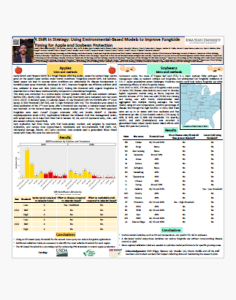 Fungicide applications are a common integrated pest management (IPM) tool, yet their use often follows a set schedule or crop stage rather than actual need. Overuse can drive fungicide resistance, undermining long-term effectiveness. The occurrence of plant disease requires a susceptible host, a pathogen, and favorable environmental conditions. Thus, fungicides should be applied only when conditions are favorable for disease development. To promote this approach, two experiments were conducted: one on apple (2021-2022) and one on soybean (2023-2024). In apple, three relative humidity-based organic fungicide spray thresholds were tested in central Iowa on three apple cultivars, with the most conservative threshold reducing fungicide applications by four per season without affecting marketable yield. Disease pressure remained low with an average incidence of Sooty Blotch and Flyspeck (SBFS) of 3.9% in 2021 and 1.9% in 2022. For soybean, a weather-based model for frogeye leaf spot was developed and tested in eight states across 10 sites in 2023, leading to a reduced number of fungicide applications. In three sites, a fungicide application at the R3 stage, reduced disease (AUDPC) but no effect on yield was observed in any site. In 2024, a new model was developed and validated in 10 states and 20 sites and data analysis is ongoing. Deciding if or when to apply a fungicide is an essential part of an IPM program, and continued efforts to refine predictive tools can offer agronomic, economic, and environmental benefits across cropping systems.
Hassan Ali hassanali_virk@hotmail.com, Faculty of Agricultural Sciences, Bahauddin Zakariya University, Multan, Punjab, Pakistan
POSTER COMPETITION ENTRY – Masters
The present study aimed to explore the impact of volatile compounds from mango fruit on attraction, oviposition and other important fitness parameters of the peach fruit fly, Bactrocera zonata Saunders (Diptera: Tephritidae), which is a destructive to mango, guava and peach as well as many other fruits in Pakistan. Attraction behavior of B. zonata female flies toward the fruit volatiles of five local mango varieties; Sufaid Chaunsa, Black Chaunsa, Fajri Kalan, Aman Dusehri, and Anwar Ratol and two synthetic commercial baiting products (GF-120 and Bio-guard) was observed in a Y-tube olfactometer. Female fruit flies were significantly (greater than 0.05) attracted to un-infested, fruit fly infested, and synthetic attractants compared to control (blank) in all pair-wise combinations tested. In the pair-wise comparisons between un-infested mango varieties, significantly more female flies were attracted towards the volatiles of F. Kalan compared to B. Chaunsa and A. Dusehri. In the case of fruit fly infested fruits of different mango varieties, female fruit flies preferred F. Kalan compared to A. Ratol, while S. Chaunsa compared to B. Chaunsa and A. Dusehri. In intra-varietal comparisons, significantly more female flies were attracted towards un-infested fruit odors than the odors of fruits of the same varieties infested by flies in all five tested varieties. When comparing un-infested mango varieties with synthetic attractants, female fruit flies preferred A. Dusehri over GF-120 and Bio-guard. S. Chaunsa and A. Ratol fruit odors attracted more flies compared to the synthetic attractant GF-120. However, significantly more flies were attracted towards the odors of the other synthetic attractant, Bio-guard, compared to F. Kalan and B. Chaunsa varieties. In the two-choice oviposition bioassay using only the un-infested fruits of different mango varieties, B. zonata female flies made significantly more visits (landing on fruit) on F. Kalan compared to S. Chaunsa and A. Ratol. Similarly, the number of visits by female flies recorded on A. Dusehri and S. Chaunsa were more compared to A. Ratol and B. Chaunsa, respectively. B. zonata females made significantly more successful ovipositions on A. Dusehri and S. Chaunsa compared to A. Ratol and B. Chaunsa, respectively. Female flies spent significantly longer time on A. Dusehri variety compared to A. Ratol during two-choice oviposition bioassay. In coordination with attraction and oviposition bioassay, a significant difference was observed in number of pupae obtained from S. Chaunsa variety and A. Dusehri as more pupae were collected from S. Chaunsa compared to A. Dusehri. Pupae collected from S. Chaunsa and A. Ratol varieties were heavy compared to A. Dusehri. Similarly, more adults emerged from S. Chaunsa and A. Ratol compared to adults emerged from A. Dusehri and B. Chaunsa. In no-choice oviposition bioassays, no significant difference was observed in the number of visits, successful oviposition, time spent for oviposition, number of pupae obtained, average pupal weight and adult emergence rate in the tested varieties. The results suggest that mango fruit odors have a dominant role in the attraction of B. zonata female flies. Female flies favor egg-laying sites that maximize the fitness of their next generations.
Andrea Rilaković arilakovic2@huskers.unl.edu, Entomology Department, University of Nebraska – Lincoln, Lincoln, Nebraska USA
POSTER COMPETITION ENTRY – Doctorate
Improving the efficacy and efficiency of insecticide applications is an integral part of Integrated Pest Management. Western bean cutworm (WBC), Striacosta albicosta, is an insect pest that can cause severe damage to corn ears by larval feeding. Inadequate insecticide application may lead to control failures. We have approached this challenge through synergy of field, laboratory, and human dimensions studies.
In a chemigation field study, the efficacy of two insecticides to reduce WBC ear-feeding injury and the deposition efficiency (using PTSA florescent dye) was tested. The low end of the labeled rates of bifenthrin was the least effective in reducing WBC ear-feeding injury and yield loss. The low and high ends of the labeled rates for chlorantraniliprole were highly effective.
Kayla Sullins kzs0070@auburn.edu, Auburn University, Department of Entomology and Plant Pathology, Auburn, AL, USA
POSTER COMPETITION ENTRY – Doctorate
In the agricultural industry, chemical fertilizers and pesticides are often utilized for promoting plant growth and suppression of pathogens. While these applications are notably beneficial to plants, the ramifications of overused/misused chemicals have led to extensive ecosystem losses and environmental damages. Sustainable agriculture seeks to maintain productivity while efficiently using resources (pesticides and synthetic fertilizers) and integrating biological components. Recent studies suggest that utilizing plant-growth promoting rhizobacteria (PGPR) as a biological alternative can reduce the quantity of chemicals required to maximize yield and protect plants. The objective of this study was to create specialized PGPR products that increase plant health in zoysiagrass (Zoysia japonica) by means of enhanced nutrient uptake and pathogen suppression of Rhizoctonia solani. In this 2-year study, 110 PGPR strains from a collection at Auburn University were analyzed in vitro for mechanisms of nutrient acquisition and antagonistic behavior against R. solani. These preliminary in vitro trials were utilized to focus strain selection to those exhibiting outstanding antagonistic behavior (22 strains) and greatest potential for enhancing plant nutrient uptake (60 strains). Follow up greenhouse experiments were conducted in which these strains were analyzed for effective growth promotion of zoysiagrass. From this data, 3 specialized PGPR blends were created and applied in field conditions in Spring 2024. Treatments will be compared to industry standard fungicides. Results from these studies will be presented.
TreDarious Clifton tclifton@students.alcorn.edu, Alcorn State University Department of Agriculture, Lorman MS USA
INFOGRAPHIC COMPETITION ENTRY – Masters
Watermelons (Citrullus lanatus) are an important fresh market crop worldwide. In 2023 the US watermelon market was valued at approximately $748 million. Pollinators are essential for our environment and crop production systems. Over 70 percent of the world’s flowering plants, including two thirds of the world’s crops species such as watermelons, depend on pollinators to reproduce. Loss of habitats for pollinators is a threat to the sustainability of farming and global food security. Pollinator health is a national research priority. More research is needed on managing habitats such as flowering plants to support pollinator populations by providing nectar and pollen resources. The objective of our research is to evaluate a diversity of flowering plants intercropped with watermelons to attract a variety of pollinators including honeybees and native bees to enhance pollination and fruit development and quality of watermelons. On June 12, 2024, we intercropped three flowering plants species Zinnia (Zinnia elegans), Sunflowers (Helianthus annuus) and Okra (Abelmoschus esculentus) with four watermelon cultivars (C. lanatus) sugar baby, Charleston gray, Jubilee, and tender sweet on the Alcorn State University Model Farm in Lorman, MS and at a watermelon variety trial on the Alcorn State University Agricultural Experiment Station. Bee traps were set up at both locations and monitored every 48 hours over four weeks to quantify the number and diversity of bee species visiting the watermelons plots. Preliminary results have shown a wide variety of bees, mostly bumble bees (Bombus spp.), visited the plots. Good watermelon pollination and fruit set was documented.
Jose A Noveron-Nunez jan0037@auburn.edu, Auburn University, College of Agriculture, Auburn, AL USA
POSTER COMPETITION ENTRY – Doctorate
Regenerative agriculture focuses on reduced chemical inputs, improving soil health while maintaining high productivity. Forage production with frequent defoliation and regrowth, is heavily reliant on chemical fertilizers. Plant growth promoting rhizobacteria (PGPR) show promise to reduce chemical inputs and maintain comparable growth with reduced fertilizer inputs, but there are concerns about consistent performance of biological products. We investigated how common soil, stand, and weather factors on 7 production sites contribute to the responses of Paenibacillus riograndensis DH44, a PGPR strain with documented success in forage grass. In greenhouse experiments, we determined 105 CFU/mL was the lowest concentration of DH44 to achieve growth promotion in bermudagrass. Data from routine soil and phospholipid fatty acid (PLFA) tests were collected on samples from each stand. Principle component analysis was used to visualize 1) key factors that contribute variation based on clustering due to treatment performance and 2) the relationship between soil factors and growth responses (forage height and mass).
Joellen Lampman jkz6@cornell.edu, Stony Brook University, Stony Brook, NY USA
In-person focus groups were conducted in Onondaga County, NY to identify current needs and best practices for effective tick bite and disease prevention among several target audiences in New York State, including those identified by the CDC to be disproportionately impacted by infectious diseases – parents of young children and outdoor workers. The analysis is currently underway using ATLAS.ti to assess the knowledge, attitudes (including acceptance and willingness to pay), and practices of these two populations regarding ticks, tick-borne diseases, and management practices meant to reduce risk.
Objectives:
Raven Butler drdsn5409@gmail.com, Alcorn State University, Department of Agriculture, Lorman, MS USA
INFOGRAPHIC COMPETITION ENTRY – Other
Small farmers in the southern region of the U.S. face challenges in managing plant diseases, weeds, and insects in crops and forest ecosystems. Yield losses due to sub-tropical climate conditions, weather extremes (e.g., hurricanes, drought, tornados), and pest outbreaks have been substantial. As climate change continues to intensify and create new pest threats, it is critical that we train the next generation of plant health management scientist and professionals in how to respond and develop new farm and forest ecosystems management practices to mitigate the impacts of climate change on crop production. Underserved farmers and communities are especially vulnerable due to limited resources and lack of integrated pest management training in climate smart agriculture. To maintain our nation’s global competitiveness in sustainable agriculture we need a diverse, well-trained workforce. The overall objective of this project is to provide students with research and extension experiential learning opportunities in climate smart IPM practices. The small farm IPM interns engaged in firsthand research in the use of cover crops for carbon sequestration and soil health. Students planted and maintained research and extension demonstration field plots to showcase the use of flowering plants for pollinator health and biodiversity in crop production. Additionally, the small farm IPM interns conducted a plant pest survey of plant diseases and insect pests impacting small farms in Mississippi and Louisiana.
Ethan Foote erfoote@ncsu.edu, North Carolina State University, Department of Crop and Soil Science, Raleigh, NC, USA
POSTER COMPETITION ENTRY – Doctorate
Key pests to North Carolina peanut (Arachis hypogaea L.) production are rapidly evolving. Whether it is new pest species, population shifts, or the development of pesticide resistance, peanut growers and researchers are continually seeking answers to current problems and solutions for future problems. Cultural practices are used to interrupt the lifecycle of nematodes in relation to the host crop. Alternative approaches to nematode management in peanuts have been explored through multiple long-term research trials to test the influence of multiple cultural practices on plant-parasitic nematode populations, both with and without the use of an in-furrow nematicide. These studies were conducted in the same fields in North Carolina to determine the effects of crop sequence, including corn (Zea mays L.), cotton (Gossypium hirsutum L.), and soybean [Glycine max (L.) Merr.], as well as the influence of conventional tillage versus strip tillage and peanut cultivar selection. In general, increasing the number of years between peanut plantings or including soybean, rather than corn or cotton, resulted in lower peanut yields and higher nematode populations. Tillage method was generally not significant for nematode populations and the interactions with crop sequence varied. Planting known nematode resistant peanut cultivars resulted in lower plant-parasitic nematode populations in the soil. These results indicate that cultural practices (i.e. crop sequence and cultivar selection) have a greater influence on plant-parasitic nematode populations than an in-furrow nematicide in North Carolina peanut production.
Abbey Stewart aestewa5@ncsu.edu, North Carolina State University, Department of English, Department of Entomology and Plant Pathology, Raleigh, NC USA
INFOGRAPHIC COMPETITION ENTRY – Bachelors
Spotted Wing Drosophila, Drosophila suzukii, is an invasive fruit fly native to Southeast Asia that devastates berry crops and fruit orchards. Over time, researchers designed thorough integrated management strategies to control this invasive pest. This infographic visually summarizes a micro-literature review written by the presenting author that reviews research published from 2019 to 2024 on management strategies to reduce D. suzukii in agricultural settings. It defines four major integrated pest management categories (chemical, biological, mechanical, and cultural control) and discusses the efficacy of each strategy to control D. suzukii. The infographic compiles research findings to offer further directions for D. suzukii management research. This information is important to understand as D. suzukii continues to develop insecticide resistance and adapt to integrated pest management strategies implemented in fruit orchards across the United States.
Rachel Denny rdenn3@lsuhsc.edu, Louisiana State University, School of Public Health, Department of Epidemiology and Population Health, New Orleans, LA, USA
POSTER COMPETITION ENTRY – Doctorate
Transmission of Leptospira bacteria, the causative agent of Leptospirosis (Weil’s Disease), to humans most often occurs through exposure to the urine of infected animals, particularly urban rats (Rattus spp.). While Leptospirosis is known to be an occupational hazard for a variety of professions, a 2023 study found that sanitation workers are four times more likely to be exposed to Leptospira when compared to workers in other urban occupations. 21% of the confirmed cases of Leptospirosis in New York City’s 2023-2024 outbreak were sanitation workers, indicating that there is a need for risk assessment and implementation of hazard controls for this occupational group in major metropolitan areas of the United States. To perform a preliminary assessment of risk of exposure to Leptospirosis and other rodent-borne pathogens for sanitation workers employed by the City of New Orleans [CNO] Sanitation department, informal interviews were conducted with field-employees and management. The knowledge, practices, and resource availability in the CNO Sanitation department were evaluated, summarized, and used to inform suggested measures to reduce the risk of worker exposure to Leptospira and other rodent-borne pathogens. Suggested measures, such as the requirement that full-length pants be worn for field activities, were formulated to follow the NIEHS hierarchy of controls. Future work aims to survey the prevalence of rodent-borne pathogens in the New Orleans environment to further assess the risk of exposure and infection for sanitation workers as well as other potentially vulnerable populations within the city.
Aerianna Littler azl0117@auburn.edu, Auburn University, Department of Entomology and Plant Pathology, Auburn, AL, USA
POSTER COMPETITION ENTRY – Doctorate
Chilli thrips (Scirtothrips dorsalis Hood) are economically important pests of ornamental, fruit, and vegetable production. In ornamental crop systems, this species causes significant damage resulting in drastic reduction in plant marketability. While chilli thrips are found worldwide, establishment in Florida and Alabama have only recently been documented (1991 and 2017 respectively). Furthermore, resistance to insecticides has been observed within their native range and recently in Florida. Due to this rapid range expansion and reported resistance, investigating seasonal phenology and alternative management strategies has become a necessity. This study aims to investigate biological control strategies, potential volatile attractants, insecticide resistance, and seasonal flight patterns/abundance of chilli thrips within Alabama. In a two-year study conducted in Mobile, Alabama, sticky cards were collected from plant nurseries to determine abundance and seasonal distribution. We observed that chilli thrips were most abundant in 3-month periods during the spring and fall, with peaks being observed in April and October. Spring 2024 results may even indicate grower surveys and treatment within their nurseries, though we are surveying growers for confirmation. A biocontrol assay was performed to determine the efficacy of two predatory species (minute pirate bugs and Amblyseius swirskii mites; individually and together) in controlling chilli thrips populations in a nursery setting. This assay includes host plants of Distylium, Cleyera, rose, and azalea with heavy chilli thrips populations and damage in Auburn and Mobile. These results may indicate sustained control over a five-week period. This assay is being repeated in Fall 2024 to confirm these results.
Lara Amiri-Kazaz amiri-kazaz@colostate.edu, Agricultural Biology Department, Colorado State University, Fort Collins, CO USA
POSTER COMPETITION ENTRY – Doctorate
The recent discovery of alfalfa mosaic virus (AMV) in Colorado chili peppers has caused major yield losses for growers, requiring integrated pest management (IPM) solutions to mitigate virus prevalence in their fields and produce better quality yields. To address this issue, we first tested for host plant resistance in the greenhouse by mechanically inoculating 20 different chili pepper varieties with AMV and collected symptom severity (number of leaves with symptoms/total number of leaves) and virus incidence (using ELISAs) for each plant. We then tested promising varieties in the field and found that several varieties showed strong tolerance (low symptom severity and incidence) against AMV in field conditions. We also investigated the ecological concept of associational susceptibility, a plant-plant association where one plant negatively affects a focal plant by increasing detection and/or vulnerability of that species to herbivores. Alfalfa is a reservoir for both AMV, and several aphid species known to transmit the virus, and is often grown in the vicinity of chili peppers in Colorado. Chile pepper farms in Colorado and California within 1-20 miles of alfalfa were sampled from May to August. Symptom severity (percent estimate of symptomatic leaves per plant) and virus incidence was assessed. Preliminary results from this study indicate that closer proximity to alfalfa increases both the incidence and severity of AMV symptoms in chili peppers. Testing for host plant resistance and assessing the risk that alfalfa poses to chili peppers will help inform management recommendations that reduce the risk of infection.
Neha Panwar panwar@colostate.edu, Department of Agricultural Biology, Colorado State University, Fort Collins, CO, USA
POSTER COMPETITION ENTRY – Doctorate
Quinoa (Chenopodium quinoa Willd.), a crop cultivated in South America for over 5000 years, is gaining popularity in new regions like Colorado due to its high nutritional value and low water requirements. However, its expansion has been severely impacted by outbreaks of a stem-boring fly, Amauromyza karli Hendel (Diptera: Agromyzidae). The larvae feed inside quinoa stems, destroying the pith and often causing plant death. These outbreaks have reduced quinoa acreage in Colorado from 3000 acres in 2022 to just 100 acres by 2024. Integrated Pest Management (IPM) strategies, including predictive modeling and host plant resistance, are urgently needed to mitigate the economic and ecological challenges posed by this pest. This study developed models to predict the phenology of A. karli using both ordinal day and degree day approaches, based on three years (2022–2024) of field data. The ordinal day model provides a straightforward calendar-based framework, while the degree day model captures temperature-driven developmental patterns, utilizing cumulative heat units above a base temperature of 10°C. These models identify critical periods of pest activity, enabling growers to time management tactics, including pesticide applications, cultural controls, and planting date adjustments. Furthermore, our host plant resistance trials identified significant differences in susceptibility among varieties, with some showing promise as resistant options. Resistant varieties planted during low-risk windows identified by the phenology models can significantly reduce pest damage. Together, these approaches enhance IPM frameworks for sustainable pest control in quinoa cultivation, offering a pathway to restore quinoa production in Colorado and beyond.
Elizabeth Rush elizabeth_rush@nps.gov, George Mason University/College of Science, Fairfax, Virginia, USA. National Park Service/National Mall and Memorial Parks, Washington, DC, USA
INFOGRAPHIC COMPETITION ENTRY – Masters RD
The National Park Service (NPS) recently implemented a policy prohibiting rodenticide use on NPS properties, except under two specific conditions: island ecosystems or collaborations with other government agencies. In response, the National Mall and Memorial Parks (NAMA) became the first national park to adopt carbon dioxide and carbon monoxide treatments to manage rat populations, significantly reducing rodenticide use in 2023. Both carbon dioxide and carbon monoxide act as asphyxiants, euthanizing rats within their burrows. NPS staff identified advantages and limitations of these gas-based treatment systems. The differing weights of the gases make them particularly suited for treating burrows in various urban substrates. Burrows in urban environments often form under challenging locations, such as beneath trash can pads or sidewalks, complicating treatment efforts. Despite these challenges, gas treatments have proven effective in managing rodent populations in these hard-to-reach areas.
Brock Dean badean@ncsu.edu, Department of Crop and Soil Sciences, North Carolina State University, Raleigh, NC
POSTER COMPETITION ENTRY – Doctorate
Integrated weed management, including herbicides and cover crops, is highly advised for controlling multiple herbicide-resistant weed biotypes. While cover crops have shown potential in suppressing weed emergence, few studies have evaluated whether combining herbicides and cover crops can alter the critical timing of weed removal in corn (Zea mays L.) and cotton (Gossypium hirsutum L.). In 2024, a field study was conducted near Lewiston and Rocky Mount, NC, to address this issue. The study design was a 2x3x2x4 strip-split plot, with main plots consisting of two crops (corn or cotton). Within each crop, three cover crops were stripped: cereal rye, wheat, no-cover. Randomized within each cover crop was residual herbicide (acetochlor at 1,260 g ai ha-1; Warrant®) versus no-residual, as well as four postemergence weed removal timings (None, 2, 4, and 6 weeks after planting (WAP)). At each removal timing, glyphosate (Roundup PowerMAX® 3) and glufosinate (Liberty® 280 SL) were applied at 1,345 g ae ha-1 and 656 g ai ha-1, respectively. Pooled over all other factors, applying acetochlor improved Palmer amaranth (Amaranthus palmeri S. Watson) control to 88%, compared to 72% without acetochlor. No differences in Palmer amaranth control were observed when plants were managed 2 (95%) and 4 WAP (95%); however, control was reduced to 87% when management was delayed until 6 WAP. Cereal rye and wheat provided 83% control of Palmer amaranth, whereas no-cover resulted in 75% control. Yield data has not yet been analyzed to determine if herbicide and cover crop combinations affect crop yield.
Ashwini Jadhav, ashwini.j476@gmail.com, RUSA Center for Food Product Development,(CFPD), S.N.D.T. Women’s University, Juhu, Mumbai, India
There are ample opportunities in innovations and technology development in silk and sericulture resources. Mulberry is sole food of silkworm B.mori hence it is cultivated extensively by the farmers. Mulberry is having high potential for value addition and for development of chain of products. Why Mulberry is a question but it is easy to grow, high biomass production in shortest time, easy to produce biomaterials, large area under cultivation in India. During the years 2022-23 about 253125 hectors mulberry area was under cultivation. Hence, a raw material is available on large scale as conducive environmental conditions are persisting in India to grow mulberry extensively . It is well established fact that, Mulberry has high GABA & 1 DNJ content, it has properties like Anti-diabetic, Anti- hypertension, Anti-cholesterol, Anti-ageing, High proteins, High minerals and Vitamins and no caffeine. Hence, mulberry can be used in various innovations to develop products useful in animal and human welfare and health benefits too. We have successfully demonstrated sustainable technologies for commercial products out of mulberry. However, there are many constraints to produce quality mulberry leaves for process of value-added products particularly infestation of various pests. Therefore, attention was given on foliar pests. Survey was carried out for two years (2022-2023 ) with local farmers to know status of promising mulberry leaf pests. It was noticed that about 20 to 30 leaf production and quality was affected due to various foliar pests. To get quality foliage and develop international quality mulberry value-added products IPM practice are highly required. There are equal beginnings for food technologists, entomologists, physicists, chemical and biotechnologists to have interdisciplinary research work in this area. Details are discussed in the paper.
Maria Cabral jessica1.cabral@famu.edu, Florida A&M University, Agronomy, Tallahassee, FL, USA
POSTER COMPETITION ENTRY – Doctorate
Sweet potatoes are extensively grown in many parts of the world. The tubers are a highly nutritional food source with a growing market and are recognized for their contribution to food security. The health of sweet potato plants is affected by various insects that can cause damage to cultivated crop in the open field and storage. This study reports pest species on sweet potatoes in Florida and compare them with pests that attack this crop. Species of pests attacking, types of attacks on aerial and root parts, levels of damage, and distribution within and among fields will be observed, along with natural enemies. Pests were identified in sweet potatoes, one for the roots and 10 for the aerial part. One is sap-sucking, three insects within the Order Coleoptera and Family Chrysomelidae, five defoliating caterpillars, and a leaf-mining micro-Lepidoptera. A major pest of sweet potatoes is sweetpotato weevil (SPW) (Coleoptera: Brentidae) that damages this commercial crop in the field and storage. Other insect pests and their natural enemies are being investigated in the Florida panhandle. Biological control is less costly and cheaper than any other method. Within IPM, one of the most modern approaches is the role of biological control in a system that must initially involve the biological balance of pests with their natural enemies and levels of economic damage. The main advantages of these types of biological control are that they reduce negative impacts on human health, have minimal impact on the environment and reduce pest resistance.